Friday, 27 September 2013

Visiting Haida Gwaii 2013

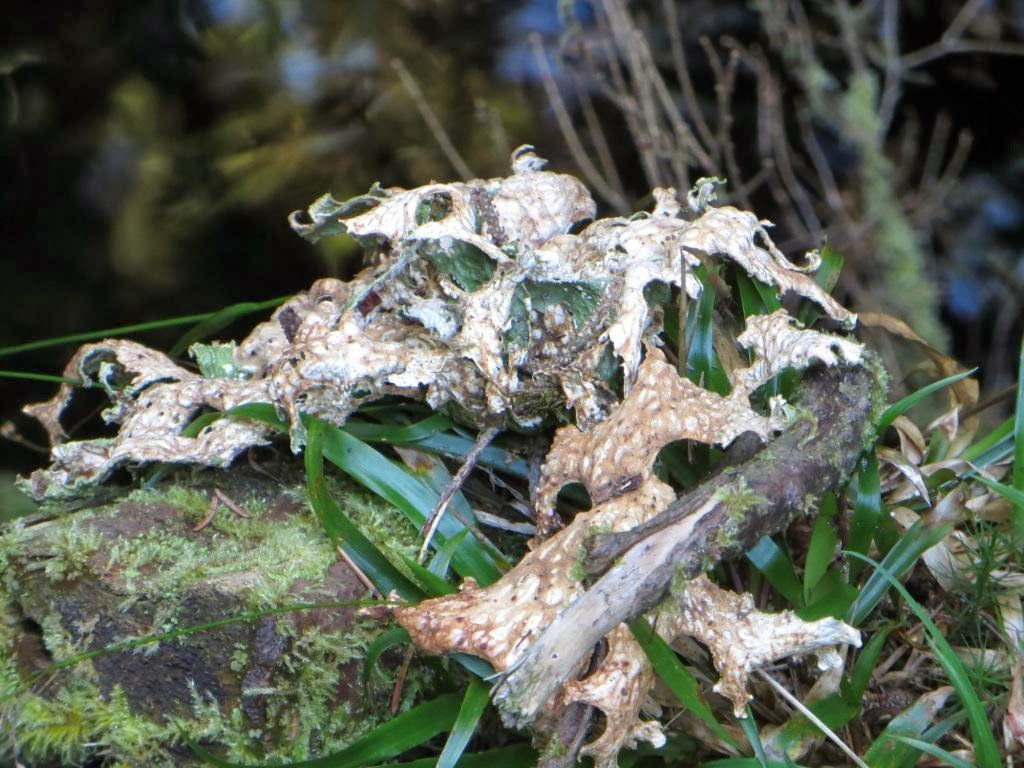
Souvenirs of our trip - hey, I'm a prairie girl and am very easy to entertain
 when near a beach.

We’ve just returned from Haida Gwaii – a shorter closer to home vacation this year as we plan for our year of travel in 2014.  We first planned to visit these islands off the BC mainland 27 years ago.  An impromptu driving holiday with two children under 4 and a large dog stopped at a rainy and misty Prince Rupert when we realized that
  • It was a seven hour ferry trip that needed to be booked ahead of time
  • In the summer you need to book accommodation, or be prepared to camp
This time, we planned ahead.  BC ferries had a package that included the booked ferry for us and our vehicle as well as 4 nights accommodation at Haida House (and accommodation in Prince Rupert before and after the ferry).  We had a fantastic time, made even more memorable because the weather was dry, warm and sunny.  The manager at Haida House helped us plan a day to Skedans as well as pointing us in the right direction for a couple of days of hiking and exploring.  To be honest, as a Northern Alberta prairie girl, put me near an ocean and I’m pretty easy to entertain!


The ferry from Prince Rupert to Skidegate was comfortable and the time passed very quickly.  We started out in thick misty fog, which was great for some atmospheric pictures, then the sun broke out and we didn’t see fog again until returning back to the mainland.  While waiting for the ferry, we met a couple from Australia who were also taking the same package trip as we were.  It turns out that they had just visited Iceland and were planning to travel to Scotland AND Rob was an even more passionate birder than Cal.  We shared stories and suggestions for great books to read.
Dock at Prince Rupert looking atmospheric


And the sun arrives and stays with us for the next five days


Hiking to the Pesuta wreck was a great way to spend the day – first half of the hike was through forest and then along the beach.  Amazing how you can feel so isolated, even though you know that you are only a few feet away from the river (and your hotel is on the other side).  We watched fish jumping and even skipping along the water.  There were groups of fishermen catching salmon and making Cal wish he had thought to bring his fishing gear.  I had a lovely time playing in the water and taking quilty pictures.  That night we realized that the Tlell river was tidal (ok, I’m a prairie girl, give me a bit of a break).  We watched as it changed from flowing south (away from the ocean) to flowing north (toward the ocean) with a few minutes of it flowing both ways.  Here’s a link to the hike. Pesuta Shipwreck Hike


The sunshine on the wreck just made fantastic pictures - perhaps an idea for a quilt?


everything is so green and lush.
Lots of rain (less than Prince Rupert, mind you)
 and every tree that falls becomes a nurse tree for others.


Playing with the water and the waves and practicing pictures with the new camera.


Loved the mossy/lichen communities


Playing with waves and water (hey, I'm a prairie girl)
Just as we came out onto the beach.  Trust me, there's an interesting fishing cabin in the trees.
I wasn't supposed to take pictures, but I couldn't resist.
Heavily beaded, I can't begin to imagine how many hours work.
Our hotel, Haida House, was newly renovated this year and used to be a bear hunting lodge.  Yes there are bear and there are also 20,000 deer that are beginning to make a nuisance of themselves.  Off islanders can get a license to shoot 14 deer a season.  It's a partnership between a big resort chain and the Haida nation.  Some pretty impressive art was scattered through out the building, all of it for sale.

Totem pole by Reg Davidson

I was fascinated by the way the wood grain is integral to the design.
 Traditionally, poles were not painted.  Blame Bill Reid for making changes.


Bentwood box, also by Reg Davidson.
Used as a drum (no lid on it)
 

And surprise, when you move it away from the wall,
the inside is also painted.

Non aboriginal artist from Tlell.
 This picture doesn't do justice.
 It was hanging in a narrow dark hall.
 Canvas has been painted, then cut, folded and sewn.
Totally incredible. Sewn art


Haida House logo.  Created by a 19 year old student.
Drop of water with a salmon eye.


Saturday, we got up early to head to Queen Charlotte City to meet with James from Haida Style.  I had no idea what we were doing or where we were going (hey, I’m a prairie girl and I was cool with the idea that we were going on a boat ride on the ocean).  Turns out, James is one of the members of the Haida council and involved in much of what is happening in Haida Gwaii.  He was also an incredible teacher about anything and everything.  My biggest problem is that he would be talking about something, and I would want to ask a question but he would have moved on to something else even more interesting.  His assistant, Stas (sorry if I have spelled it incorrectly, it was the short form of his Haida name) was a young very quiet man who was equally fascinating.  He piloted the boat for the over one hour trip there and back and it turns out his career plan when he finishes grade 12 next year is to get his license to pilot the big freighters that ply the waters along the coast.  Oh yes, his father will be the next hereditary chief of Skedans and his brothers were the main carvers of the Legacy Pole Gwaii Haanas Legacy Pole and his grandmother was in the last canoe to leave Skedans in 1906.  To be guided through this once thriving community by someone who learned the stories from those who have lived there was a privilege.  As we walked, he and James would consult each other about memories to make sure they were telling the stories of the poles correctly. And the fresh cooked salmon on the beach was excellent.
Setting off from Queen Charlotte City.  No, it wasn't cold,
Cal didn't want to burn his head anymore!!


on our way to Skedans, we pass an island of Sea Lions.
First the ladies jumped into the water.  Then the younger males started making a lot of noise.
Then the big male sat up and took charge. With my camera on a small boat with maximum zoom,
 you can get some great pictures.  If you take dozens to allow for the boat and the waves...

some more quilty patterns
way cool effects.  Thank you sunshine.


beach at Skedans
even driftwood looks cool
our zodiac waiting for us.
mortuary poles (you can tell from the rectangular holes at the top
where a bentwood box would have been situated)


this huge tree had fallen since James had last been here.
  I get the term Widowmakers now.
post card photo of Old Masset in 1881.  Skedans would have looked similar.

James (front) and Stas
I would have never know that this was a totem pole "returning to mother earth".
 Stas could point all the amimals out and knew who it belonged to.
yes, another fallen totem pole
environmentally sensitive.  Note the wind turbine at the top of the tree,
the satellite panels part way down and the solar panels on the top
 of the cabin where the Watchers stay all summer.
The chief's house.  Six beam.  Abandoned in 1906 (at least for full time living)
  James and Stas both remember coming back here to stay in the summers.
 Reminded us of Iceland - in that ancestors are still very much
 remembered and you know about the buildings

Answering the question about how do you get the boat
 out in the middle of the water - kayak.


The southern islands are very mountainous.
Haida Gwaii is on the boundary of two plates which are pushing together.

Cormorants.  Getting better at taking long distance maximum zoom pictures
Lunch on the beach.  It's a tough life.

Our last day, we drove up to the North of the island.  North Beach, Tow Hill, Masset, Old Masset.  Some walking, some climbing, some more time on a beach.  Old Masset was the First Nations community and we were warned that there was a lot of poverty there.  Interesting, because coming from Northern Alberta where we have close contact with first nations communities, or impression was more how thriving the community was.  Yes there were buildings that were abandoned and in poor repair, but also there were houses that people were clearly proud of.  James had explained to us how the Haida nation are working on a process where land can be individually owned (so you can then be eligible for mortgages and have a feeling that it belongs to you).  Masset also is home to a number of new totem poles.

Sarah's Haida Arts, Old Masset.
Door was carved by Reg Davidson for his father and step mother (Sarah)
 in 1975.


Assorted interesting finds on North Beach


I have no idea what these are, but they were very much alive with
arms reaching out from the shell.
North beach from the top of Tow Hill.  Fairly easy climb.
Other than the fact that there were steps build by "fit young, long legged men"
 which meant that natural walking wasn't happening.

Our final stop was to walk into the site of the Golden Spruce.  We have the book by John Vaillant and I’d recommend it to anyone. 


On our way from Prince Rupert, listening to CBC Vancouver as the only radio available, we heard about the first winter storm of the season which closed down the ferries for two days.  And the first snow in Fort Nelson.  Thanks Haida Gwaii for a great holiday.  

The clouds rolling in as we leave on the ferry.

Inn on the Harbour Prince Rupert
Carpet and wall coverings.  Must have been designed by a quilter!


And finally, just around the corner from our hotel in Prince George...
Revolving doors used by Al Capone and others

Saturday, 17 August 2013

Looking back, planning ahead

I’ve started a couple of long range quilting projects and a workshop I took with Debbie Bates in July is tying together the past to these very future oriented projects.

Travel


I’d been saving this delightful vintage photo with a saying that really spoke to me waiting for the right project.  That project was a four page fabric book we created in our first class.  It’s created entirely of fabric and embellishments that have travelled with me (I still can’t believe that I actually thought I’d spend my evenings in Australia crazy quilting) or that I found on my travels.  Finally a place to combine shells, rocks, pearls, paua, ribbons….  The original photo came from Queenisms.com.


And here’s a spectacular bit of sun dying that I did on the one gloriously hot and sunny day we had this summer.  June 30 and plus 33.  Compared to the fabric painting I did this winter, I can’t believe what happens when sun and heat speeds up the drying.  The leaf shapes around the edge are all from our yard and the texture in the center comes from sprinkling pickling salt on the wet freshly painted fabric.  It’s been stitched to some flannelette with a grid of six inch squares.


My vision is that this will come with me on our year of travel and each week’s square will get a bit of stitching or autographing or appliquéing of fabric from the trip.  Perhaps some spice stained fabric from a bazaar, or some felted wool from along the silk road.  A sort of a fabric journal is what I’m thinking of.  I even have a wild idea of where and how I’m going to create the backing for this quilt, but it’s a secret til it actually happens.

Career/Retirement

It’s become a tradition at the Health Unit to make an autographed quilt when someone retires so they have something personal to remember us by.  In 2012, we were talking about this as we were planning the latest retirement party and someone asked, jokingly, who was going to make my retirement quilt.  Thinking about it, I realized that I was very much looking forward to making my own quilt, with the help of my friends and colleagues.  It’s going to be a flower garden much like this picture. 

I soon realized that I wanted my garden of memories to include as many of my former colleagues as I could find and persuade to autograph one of the flowers.  I’m excited to spend the next few years hunting people down.  As I’ve been doing this, it’s been a great trip down memory lane.


Who’s going to make my retirement quilt?
I will she said, excitedly.
(To be completed in 2020 or so)

The second class I took with Debbie Bates was to start to create an altered book – something I’ve enjoyed looking at in magazines but never had an idea of what or how to do it.  The first step was to find a book that I was prepared to take pages out of and add things to, which was surprisingly hard for a passionate reader.  After days of browsing books that I have stashed all over the house, I found the perfect one and read it cover to cover for one last time.  It’s a classic nursing text from the early 1980s that I knew I had but had forgotten what exactly it was about.  Actually, I hadn’t forgotten because I realize that how I have worked with clients and lived my life over the last thirty years I would have first read about in this book.  More memories, and a fun way to journal important bits from the past.  Here’s pictures of the front and back – and as I get some of the middle in a more finished way I’ll share them too. 


  I think that this will be a never ending project.  The book?  Novice to Expert by Patricia Benner.  I think I would have heard about it from Maureen Leahy when I was taking a post basic mental health nursing certificate.

Tuesday, 25 June 2013

Memories of Scotland

Clò Mòr I

Ambheil cuimhne agad air?

If I haven’t mangled the Scots Gaelic too badly, the title of this quilt is “Grand Cloth (Harris Tweed) – do you remember it?”

When we were planning our trip to Scotland in 2011, our guide to the Western Isles, Chris Ryan, mentioned we could visit a local croft where Harris Tweed was being made (at least, that is what I thought he said).  Instead, we started our day at Harris Tweed and Knitwear at Tarbert (the port) where there was a lovely shop with things Harris.  And a huge storage building with floor to ceiling shelves filled with bolts of Harris Tweed – traditional colours and patterns as well as the bright new colours.  Two or so glorious hours later, I had touched every bolt, decided what I wanted and emerged with a huge smile on my face with a beginning of a plan for a series of small quilts with a background of Harris Tweed crazy quilt to remember our trip by.  Chris and Cal had bonded over the trials and tribulations of women and retail therapy.

We did see some hand looms and how Harris Tweed used to be made.  It’s now made in two factories on Lewis.  To be genuine Harris Tweed, it needs to be wool from Scotland (it comes from the mainland because the sheep that can survive on the Western Isles have wool better suited to carpets) that has been processed on the islands of Lewis or Harris.  Completely opposite from North Ronaldsay or Shetland sheep products – where the sheep are raised , but the wool is processed on the Scottish mainland.  Don’t get me started on sheep J

The found items on this quilt include ceramic buttons from the Harray Potter on the Orkney Mainland and a lovely earring from a gallery somewhere on our travels on Lewis between one Neolithic set of stones and another.  The silver spoon and the other buttons came from “The Handspinner Having Fun” at Broadford, Isle of Skye where I also picked up some handdyed Corriedale wool.  Checking the website, the owners close up shop in the winter and go travelling – the spoon was actually created in Peru! The pewter broach is from the West Highland Way – ordered online because I didn’t buy it at the beginning and there were none available at the end.  And the Celtic Red Deer came from the shop at Jarlshof on our last day before heading to Glasgow then home.  The shells are from an afternoon of beachcombing on Eigg, where we were also treated to the official island piper, Donna, playing Happy Birthday as one of the boats left port.

Clò Mòr II
Flùr na h-Alba
(Flower(s) of Scotland)


When we visited Scotland in 2111, all the flowers were in glorious bloom.  Everywhere the hills were purple with heather and the perfume was almost overwhelming.  This is my interpretation of a bouquet of wildflowers, pinned up with some North Ronaldsay wool which I found on the Orkney Mainland.

Flower of Scotland is a song written by Roy Williamson of the Corries in 1967 to commemorate the victory of the Scots led by Robert the Bruce over England’s Edward II at the battle of Bannockburn in 1314.  It’s become the anthem for the Scottish Rugby team and many Scots would like it to be their National Anthem.  The classic video is of the 1990’s 5 Nations Rugby Cup match where Scotland (the underdogs) went on to defeat England 13 – 7.  Rivals a New Zealand All Blacks Hakka for power.

Thanks to Trac (the regional Alberta library consortium) for enabling me to borrow the many books on creating 3 dimensional flowers from fabric – some of the flowers are from patterns from the 1990s as well as more recent books.  The buttons for flower centers are some more of the Harray Potters (he would like to remind everybody that he had his name first).  Fabric was all handpainted with a class at Seams Easy.

The Flower of Scotland

O flower of Scotland
When will we see
Your like again
That fought and died for
Your wee bit hill and glen
And stood against him
Proud Edward's army
And sent him homeward
Tae think again
The hills are bare now
And autumn leaves lie thick and still
O'er land that is lost now
Which those so dearly held
And stood against him
Proud Edward's army
And sent him homeward
Tae think again
Those days are passed now
And in the past they must remain
But we can still rise now
And be the nation again
And stood against him
Proud Edward's army
And sent him homeward
Tae think again

Words and music: Roy Williamson. (c) The Corries (Music) Ltd.
Website: http://www.corries.com/


The Flower of Scotland (Gaelic translation)

O Fhlùir na h-Albann,
cuin a chì sinn
an seòrsa laoich
a sheas gu bàs 'son
am bileag feòir is fraoich,
a sheas an aghaidh
feachd uailleil Iomhair
's a ruaig e dhachaidh
air chaochladh smaoin?

Na cnuic tha lomnochd
's tha duilleach Foghair
mar bhrat air làr,
am fearann caillte
dan tug na seòid ud gràdh,
a sheas an aghaidh
feachd uailleil Iomhair
's a ruaig e dhachaigh
air chaochladh smaoin.

Tha 'n eachdraidh dùinte
ach air dìochuimhne
chan fheum i bhith,
is faodaidh sinn èirigh
gu bhith nar Rìoghachd a-rìs a sheas an aghaidh
feachd uailleil Iomhair
's a ruaig e dhachaidh
air chaochladh smaoin.


(translation by John Angus Macleod)

After listening to a number of versions of this song, I then moved over and read Jack Whyte's The Renegade (early years of Robert the Bruce) and I see that the next book in the series is now available.  The Scots take their history very seriously, even if it happened centuries ago.

Stay tuned for the final Clò Mòr - Standing Stones will be the theme and I'll include some of our pictures, too.