Thursday, 21 September 2017

Exploring South America 2017: Colour Shape and Texture (Pretties and Not Sos)

(During my year of travel through Asia in 2014 there was always a bit of down time to write a blog post and upload photos.  This time, though, it seems I was always too busy exploring South America or visiting with folks.  Not a bad thing, because it’s given me time to think about those experiences and search for the “same same different” between countries.  Instead of writing about each country I visited, I’m going to start with a number of ideas that flowed across borders.)

Years ago when we had just purchased our first “state of the art” camera, we headed to Jasper National Park for a holiday and to play with our new toy.  While Cal focused on birds and other wildlife, I discovered how fun it was to focus in on the tiny wildflowers, or the rocks and rugged branches on the trees.  First off, they didn’t move so I could take the time to focus manually as well as try out all the different settings and other gadgets that came with the camera.  I quickly fell in love with the details I was focusing on.

I remember crouching on an alpine trail trying to see how much I could zoom in on a tiny flower that was blowing gently in the wind, having to place myself so my shadow didn’t block the sun and needing a fast enough shutter speed to allow for the movement caused by the wind.  In the pre digital era, I couldn’t just take a dozen images and choose the best one. Finally, capturing what I thought was going to be a great photo, I moved on.  And realized that a group of Japanese tourists had been watching carefully what I was doing and then crowded around “my” flower to snap photos of what must have been very important!

Over the years, my idea of what is interesting has been modified by my passion for quilting.  Colours can be ideas for a quilt.  Lines and shapes can be quilting designs.  I find myself feeling an object to see if what I see/feel is the same or different. Learning about perspective in quilts means that I often look for different angles to emphasize part of my subject or to capture the sky.   Years ago, a friend shared the following quote with me - “trying to reason with some people is like trying to describe the smell of the colour nine” - and although I understand what she was getting at, I find that my favourite photos are trying to do just that.

I don’t use a state of the art camera any more.  Instead, I have a Canon Powershot that I can use in automatic mode or make simple manual adjustments.  It’s small enough to travel in my pocket or attached to my backpack chest strap. Like my fellow traveler Mark taught me, I take dozens of photos even if they aren’t perfectly composed, because you’re bound to find something interesting. You won’t find any fancy editing to these photos, usually just cropping to emphasize what looks interesting and to get rid of what distracts. I’ll use autocorrect occasionally when my camera and I disagree about the colours we saw. Some of the most interesting photos, to me, are the ones where I've asked my camera to go way beyond its comfort zone. 

Here’s some of the colours, shapes and textures I discovered in South America.  Be sure to zoom in on details, because that is usually what caught my eye.

Rough and rugged
The stark beauty of harsh landscapes has always fascinated me.  From the Argentinean Patagonia, through the sub arctic Tierra del Fuego and then northward through the deserts of Chili and the altiplano, the shapes and textures were breathtaking.  How do living things survive in these environments?  Stubbornness and determination, I think.


Seals, who I learned are not lazy, but exhausted after hours of fishing for dinner


Rest stop heading out from Torres del Paine.  Then on the road to Ushuaia.
We all headed toward the ocean with the crystal clear reflections. No need for snacks when you can feast on this glory.


One of our very few "real" bush camps.
  Just before the border into Argentina as we headed to Tierra del Fuego.

Beagle Channel.  I thought this was some kind of statue.
It was the wreck of an old building.


Sheep wool


Abandoned train on the salt flats.  Rust is always a great texture


Salt desert on the altiplano.  Stubbornness and determination on the part of the plants


Near Macchu Pichu.  Hmm, is this coming our way?


Lush and green (flowers and such)
In direct contrast were the areas of abundant rainfall – the Pantanal of Brazil, the cloud forests and the Amazon rain forest. Hundreds of shades of green dripping with moisture and brightly coloured flowers that looked almost unreal.  Few of the plants familiar to me, so I simply enjoyed their nameless elegance. The occasional one that I recognized as one that could be a pampered houseplant where I live, but was looking so much more at home in the wild.


Paperbark tree (eucalyptus)


In the desert, if you look carefully, there are these wee plants determined to make a go.

Coming toward Perito Moreno Glacier through cattle country.  Everything seemed vaguely familiar.  Ranchers removed all the natural vegetation, discovered the poor soil wouldn't grow grain and then planted Alberta grass to try and stop erosion and to feed cows.  Of course it looked familiar!  Except the mountains were toward the east.


Tagua seed.  Vegetable ivory.  Eco friendly.


Following the bikes down the death road, which drops through the cloud forest toward the Amazon.
 Everything is willing to grow with the moisture, a bit lower altitude and a richer soil.


Exploring the edges of Lake Titicaca


Herbal remedy.  Once my guide, Juan, realized I wasn't going to die (was just slow), we had these fascinating conversations about the many plants we passed along the trail.


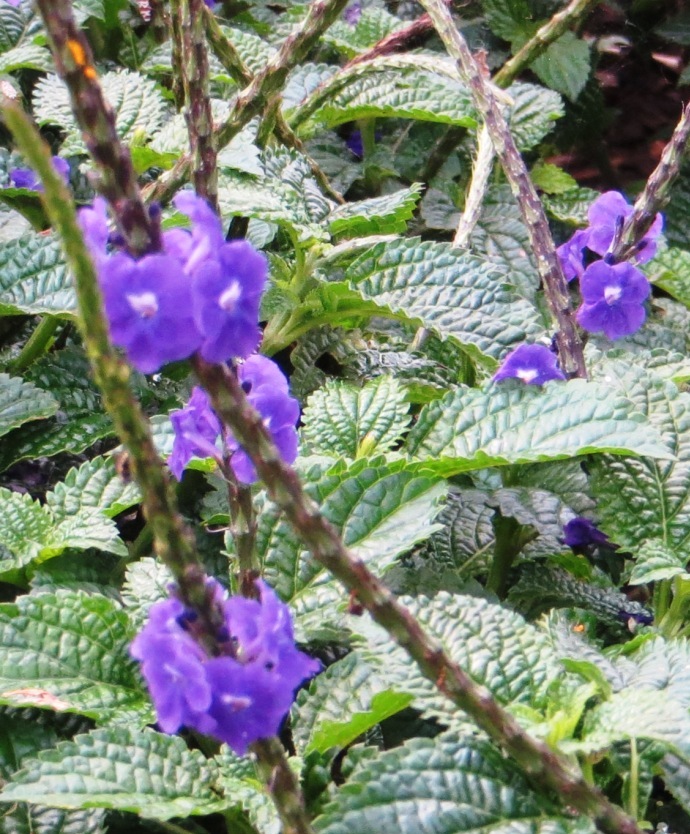
Lupins originated in the Andes.  Apparently, the higher the altitude and the colder the temperatures, the bigger and more vibrant are the the flowers.


Poisonous if it touches your skin.  Our guide told a politically incorrect story about this.


Market in Arequipa.  Shopping for a cooking class.


Leaf cutter ants make the best decorations

Found bracelets made of these seeds through out the Andes.  Designed to protect the wearer from the evil eye

Tagua seed before cutting

Ecuadoran cocoa.  Mmmm

the seeds unshelled (L) and with shell removed and ready for roasting


Palm leaves cleaned and drying.  Next step, Panama Hats.


Bananas.  Yes, pink


What the wild ginger looks like when it has gone to seed


the ridges you can barely see are terraces from the local indigenous (not Inka) people pre Columbian

Coffee beans dried but not shelled yet

Roasted coffee beans.


rather artsy from my iphone in dim light and at maximum zoom

Natural remedy apparently

Birds and bees (and other bugs and beasties)
The joy of slow travel is that you have the opportunity to bump into the locals – the birds that are watching you from the trees, the insects perfectly adapted to their environment and all sorts of other creatures.  My camera doesn’t have the power of the big lens state of the art cameras, but the ability to take a quick photo as something flits by means that I sometimes get surprising results.


Fish hiding in the reflections 


Rhea (a relative of the ostrich, and the name of our tent) feathers


Guanaco skeleton.  Torres del Paine.


Museum in La Paz.  I was fascinated by these brightly coloured fiber art items.  It took me a bit to realize that these were all examples of traditional indigenous art using feathers from the birds of the Amazon.  We had come into Bolivia through the altiplano and I needed the day on the death road (which connects Bolivia to Brazil through the Amazon rain forest) to realize that half of Bolivia is jungle.


Responsible beachcombing at Punta Sal. 


Not only was Hannah a dog whisperer, but her tent attracted all the cool insects at Rio Verde


Sky (and Water)
There were some pretty marvelous skies during my travels.  Partly, I think, because the days were close to twelve hours in length which meant we were almost always out and about for sunrise and sunset.  But even during the daylight hours, the clouds and the quality of the light was so different to what I live with in Northern Alberta. My camera and I have reached an understanding about sky photos – it has some very clear ideas of what colour things are (black skies get lightened up and pinks are a more friendly orange) and I just go with that idea.  In exchange, it will take photos without flash or tripod in almost total darkness.

Water reflects the sky, or changes depending on the sky, or enhances the sky.  Water means oceans or lakes or rivers.  All of which appeal to this land locked prairie girl.

Standing on Copacabana beach with my back to 200,000 partying Brazilians


The reward for getting up early


Huge cactus in the Atacama.  Used as the only available wood for roof beams and furniture.

Yup, the moon with my wee camera.  Through a telescope at San Pedro de Atacama.
Sunset on the salt flats.
  Flags of the countries participating in the Dakar rally which had passed through here the year before.


The sky was out there somewhere.  Following the bicycles down the death road.

Lake Titicaca from the Bolivia side.
and from the Peruvian side


Quilotoa (a crater lake in the cloud forest of Ecuador).  We hiked part way around the rim then back to our hostel.


A crazy long drive day with truck getting stuck, overturned vehicles and roads that made Northern Alberta cut lines look like paved highways.  But there were these incredible skies.


I didn't realize that I was getting a Caribbean vacation!

Man made beauty
It was fascinating to see the way things are built in South America.  The most commonly available material was adobe – or bricks made of local dirt, water, and some plant fiber to make it stick together.  It might be plastered over, sculpted and painted to look almost like carved European stonework.  Even the new multistory buildings were built with adobe bricks as the internal structure. With a little wear and tear, the internal adobe showed through in its delightful roughness.  In contrast, the Inkas built their holy places of stone and the Spanish made use of these stones to build their own holy places. So, unlike the adobe which needed to be constantly maintained, these structures are as they were five hundred years ago


Market in Rio de Janiero.  I can only imagine how early the  shopkeeper got there to arrange these peppers.


Dancers at the Sambadrome.  Really far away.  In the almost dark.
Cool artsy swirl of colours.

Restored adobe wall.  But leave a bit of the old to admire


View from the loo.
An incredible over the top rest stop with this great weathered door to the ladies loo.


Buenos Aires.  Memorial to the war for Las Malvinas (Falkland Islands)
Note the child's runner added.


view from the loo 

very close up of some great grafitti.
Artist making use of the roughness of the wall

Eddie and greenery.
Famous grafitti artist was doodling while having a beer at the bar.


Alabaster (a type of stone) was used in church windows


Memorial to the disappeared.  Very subtle.
 Move from the traditional white scarf stensil to the dove of peace.

Incredible goldwork embroidery.
Original flag of the province of  Tierra del Fuego and Las Malvinas 

Another view from a loo


My camera really likes playing with water at extreme zoom


Statue to the indigenous peoples of Chili


Mummified body

A hat.  Really.


Although the Inka had no system of writing, this is what they used to keep track of accounts.


Our estancia "Los Protreros" for the miles of dry mount walls that were built
by indigenous people under the direction of the priests.
Made me think of cotters homes in Scotland


Hmm can I figure out how to do this knot?


When you live in a harsh land, you plant what will survive


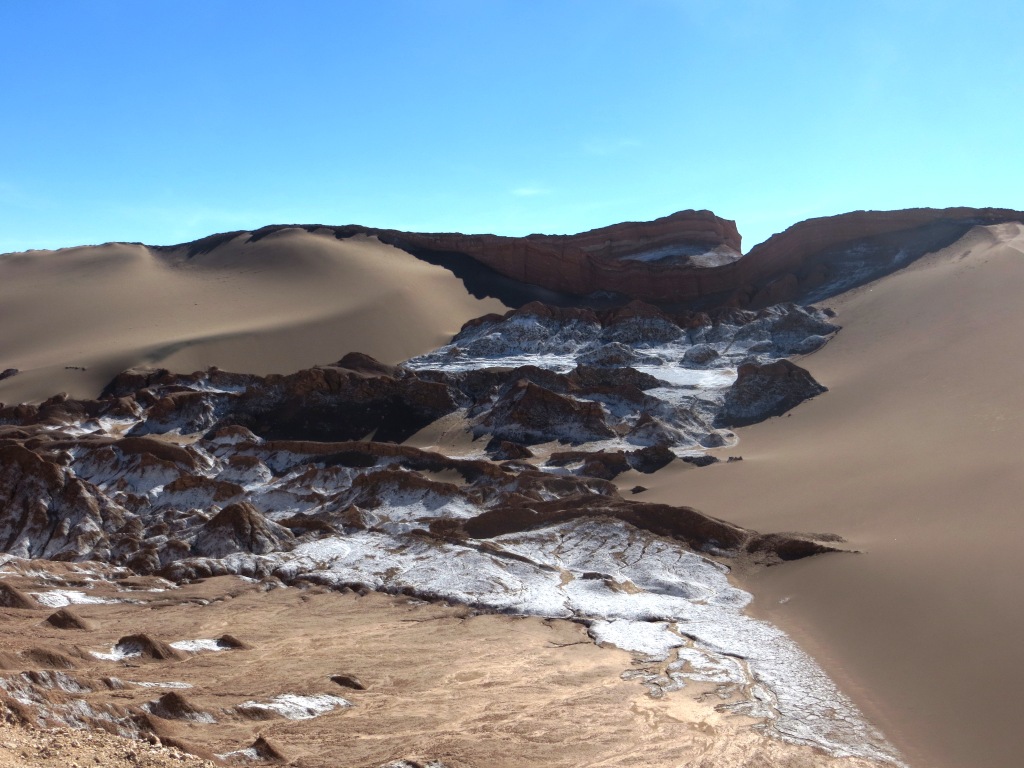
Salt flats.  Mined for salt bricks.  Looks like a layered dessert.
Left furrows in the ground just like when cutting peat.

Our oasis after too much altitude and too many miles.

Church in San Pedro de Atacama from the 1600s.
  Recently the adobe was all restored.  The original roof is cardon (cactus) bound with llama leather.

Mausoleum in Recoleta cemetary Buenos Aires.  Famous general.
Replicated the mountains he spent his life fighting in.
Our hotel in Uyuni was an oasis in a very harsh environment.  Pizza, hot showers and warm beds, and some marvelous textures in the nooks and crannies.  Someone had taken the time to make a functional wall into a work of art.

Some cool statues made of mechanical parts. 


A rain shelter along the death road with some added art.


With the weather, the bikers were soon mud covered.  Through several layers of clothing.
This is the back of a biker at the end of the ride.  Great idea for a quilting pattern

The indigenous ladies of La Paz wore these beautiful hand made hats felted from local wool.  They were passed from mother to daughter.  Every day hats would have a simple ribbon, but I did see a couple of obviously wealthy Aymara women with hats embellished with jewels that matched their equally stunning clothes.

Knitted cap from well before the Spanish arrived.
Textiles survive a long time on the altiplano with the cold and the dry conditions.

Contemporary statue on one of the plazas in the historical section of La Paz


More very old textiles.  Burial straps, so woven of higher quality wool and preserved around the corpse rather than roughly used, worn out and then discarded.  The textiles were fascinating for their still vibrant colours and complex designs still being used today.

Farming on the way to Lake Titicaca.  Stuking the grain because machinery isn't an option.

Exploring Tiwanaku ruins on the way from La Paz to the border.  Pre Inka.  the first of many ruins.


Dry mount stone house on the shore of Lake Titicaca.  

Isla de la Luna.  Our first Inka ruin.  
The first of many sets of Inka ruins in and around Cuzco. Each a little different.  I never got tired of the stories.


Original water pathways from 13th century


I was tempted to reach over and put a few of these balls of wool in my pocket. 


Modern art at Qorikancha - museum in Cuzco.  A "map" of the Inka empire with Cuzco as the navel of the world


Our homestay had beautiful beds and warm blankets and this wonderful window covering

our hostess' all purpose shawl, backpack, carrier of everything.


As the plaster weathers, you can see the old adobe bricks

Rust.  Totally incidental to the other cool stuff at the Chan Chan ruins

After a long day of travel - flight from the Galapagos then four hour drive through the mountains to Cuenca, I was walking through deserted streets looking for some dinner.  This is what I saw as I came around the corner and into the main square - where I found pubs with live music and a lovely quiet restaurant with great food.

Beautiful new plaster to update the wall, but leave a bit of the old showing.
Very appealing to this quilter.

Wee cafe in the old cathedral (now a museum)


In Cuenca, when you are plastering the wall of a hat shop, what else would you do for decoration?

South American cemeteries are fascinating.  This one in Quito had lots of well weathered adobe buildings showing their inner structure


Guayasamin museum.  Couldn't take photos inside, but there was cool stuff outside.

Calendar at Inkapirca


Small modern chapel at the top of the Telerifico in Quito.  Doors were locked, but I could take photos of the sun shining through the stained glass windows through the front glass door AND get reflections of the clouds and the mountains


Seeds make beautiful jewellery


Preparing to dye warp threads for ikat.  The resists are threads made from the agave leaves


What you need to prospect for gold on the Napo river (edge of the rain forest)

Ecuadoran cows certainly do no look this well nourished.


Colonial buildings in Cartagena (the balconies are wooden)

Republican buildings (balconies are cement)


city wall built to protect from the British pirates


park bench built like a wave


Lights in the park imitating the stands of bamboo


Rocking chair on our river boat at Mompos.  The weave is identical to my old rocking chair!


Ecuadoran chocolate left in its bag in the heat creates beautiful art


gate to nowhere

Hand made barrels to collect used water bottles


At the market, corn was being shucked by the hundreds


Mompos.  the old river wall


Our Caribbean vacation. Walk in.  Sleep in hammocks under a roof to protect from the nightly rains.  Food was ok.  The beach was stellar.


These two buildings are called french fries and ketchup


Arepa.  The most incredible bread made of ground fresh corn.  Only in Medellin.

The Galapagos with a new camera: different light, colour and detail
My poor camera started to be very temperamental after 23,000 photos, a dust storm in Dunhuang (China), snorkelling in a not entirely waterproof container in Brazil, and then a drop from my hands to a cement sidewalk at Ingapirca.  So a new wee cameral entered the picture just before traveling to the Galapagos.  I had no choice at all – it would seem that South Americans use smart phones for photos or travel to the US on vacation and buy a camera there.  After much searching, I discovered a Sony Cybershot in a computer shop in Cartagena and the choice was made.  The advantage of this new camera is a lot more pixels so way more detail within its range of where it will focus.  The disadvantage is that it is totally point and shoot with a very limited zoom.  It made up its mind what to focus on (not always the pretty flower I wanted to catch) and how much light it needed – daylight was good.  But, I did get some pretty special photos of a very special place. (Update, my Canon Powershot has been repaired and should be back home soon)


I think that the Sally Lightfoot crabs are this beautiful colour to contrast with the black volcanic rocks!


Responsible shell collecting in the National Park

Pelican.  Check out the detail my wee camera gave to the feathers


Shipwreck on one of the beaches.  This is what is left of the beams.


Boobie and baby


Bad hair day

Underwater.  From our dinghy.


Marine iguana skull, I think


Blue whale (YES!!) one of several that came to check out our boat


Crumbly bit of lava

I have dozens of seal photos.
 This little one was a few days old - old enough for mum to leave and go fishing.


These are remnants of a mangrove forest - tsunami from one of the earthquakes off Chili flooded this area.
Mangroves don't disintegrate like other woods.
Beached whale from 8 years ago.  Great colour contrasts


Chinese hats (limpets) very much alive and well


Land iguana


Great quilting pattern.  Tracks of a land iguana actually


Galapagos penguin.  Not the one I swam with.


Turtle rescue center.  The rooster and the leaves made a more colourful photo.
And there is an ongoing discussion about why chickens cross roads.


My iphone at its very limit of zooming gives an interesting look


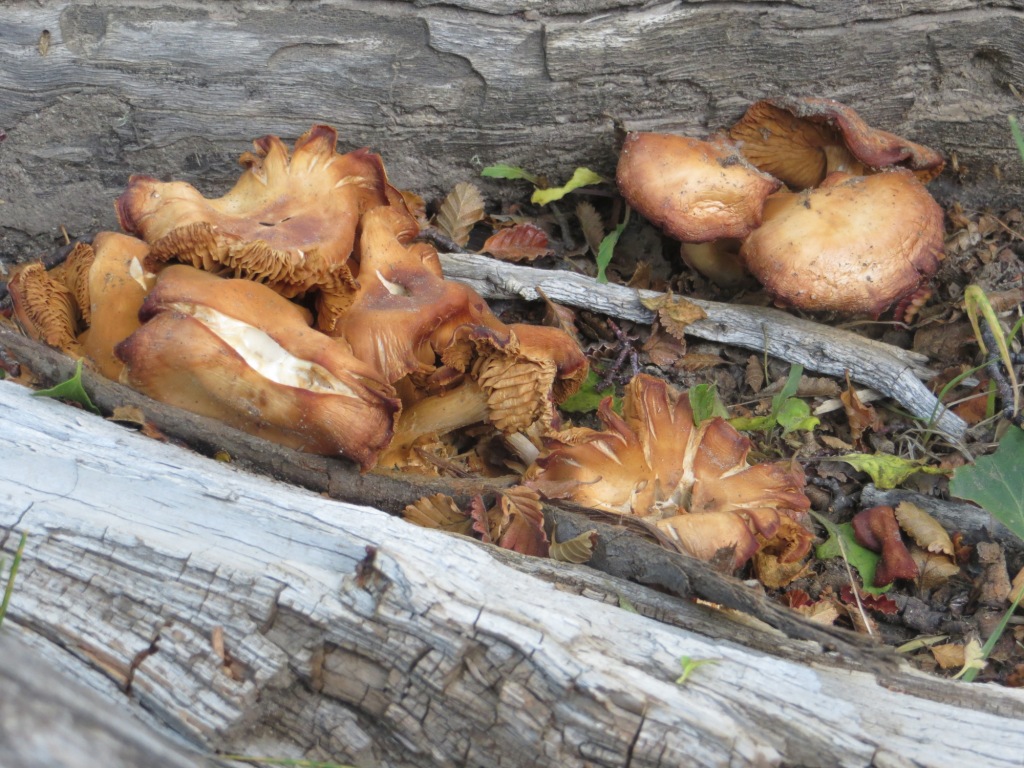
mushrooms


Sunday, 20 August 2017

Exploring South America 2017: Politics, Protests and the Right to (Respectfully) Express your Opinion

(During my year of travel through Asia in 2014 there was always a bit of down time to write a blog post and upload photos.  This time, though, it seems I was always too busy exploring South America or visiting with folks.  Not a bad thing, because it’s given me time to think about those experiences and search for the “same same different” between countries.  Instead of writing about each country I visited, I’m going to start with a number of ideas that flowed across borders.)

Given the current political events in America (riots in Charlottesville), I’ve been thinking of my experiences with how the countries I traveled through managed the complex issue of maintaining public security while allowing citizens the right to express an opinion. 

Knowing the history of dictatorships, repression and violence in many of the countries I was going to visit, I expected there to be a strong police presence and reluctance by citizens to speak openly (as I had experienced in Central Asia).  Instead, what I saw was a very visible police/military presence determined to keep the peace, to treat citizens respectfully and to give the message that their community was a good place to live and to visit.  In turn, citizens openly expressed their opinions about the government, or the economy or politics.  Protests happened regularly, but any of the ones I was involved with were peaceful.  Yes, there is serious violence happening in Venezuela, and none of the governments are perfect (there are clear distinctions between the advantaged upper class and the disadvantaged lower class), but it seems to me that protesters in first world countries could take some lessons from how conflict is respectfully dealt with in South America.

Brazil

I’ve written about my experiences with Carnival in Rio de Janiero.  Looking back, I think of walking to and from the Sambadrome in the dark, or exploring the favelas, or the classically insane crowd of the Copacabana bloco (200,000 drunken people partying on the beach). I personally did not ever feel unsafe – but I did the same kinds of things I would in any city in Canada. We heard of wallets or phones being stolen (when they were left available to be taken) but not of violence to people or property.
Grafitti near the Selaron steps in Rio de Janeiro. This is a tribute to a local community leader (so by the rules of graffiti should have been left alone).  When it was covered over, there were major vocal protests for days until the original work was replaced.  No injuries, no property damage.

Copacabana bloco street vendors.  "Please, take our photos" 
Rochina favela.  We were listening to the story of when a tourist was murdered a few years ago.  After being warned, as we were, to ask permission to take photos of people, he had from this location, taken photos of a drug deal going down.  He was seen and shots were fired. When it was discovered that it had been a stupid tourist, rather than undercover police, apologies were given and the man firing the shots was surrendered to the police. I was asking myself if an incident like this in Canada (or the US) would have escalated to all out war.
Argentina

I first met the concept of “the streets belong to the people” as we came into Buenos Aires and were caught in gridlock caused by the local truckers’ union protesting in the Plaza de Mayo.  It had been announced ahead and there was a police presence politely marking the boundary where it had been agreed that the protesters could block traffic.  Vehicles slowly made their way through, honking or waving in support.  As we passed in our bright orange truck, many of the protesters waved at us and took photos as we waved back.  At the agreed upon time, the union packed up their signs and left.  The message had been given to the government and there had been no violence. We learned later that blockading roads was something that happened everywhere on a regular basis to make a point about whatever was concerning a group – we made an early start out of Ushuaia to beat the planned border blockage that the local indigenous groups were having.

This concept came from the opposition to the military dictatorship from 1976 to 1983 in response to repression of the right to meet.  Following the return to elected government, it became a primary right to meet as a group, to say what you wished to say either verbally or in writing. There is tolerance of the protests and road blocks and work stoppages, even if there is a strong police and/or military presence.  Citizens accept/expect that there will be work stoppages as part of their strongly held belief that the streets belong to the people.
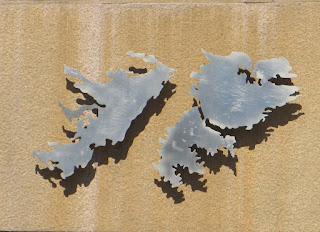
Las Islas Malvinas on the memorial in Buenos Aires

Buenos Aires.  This is what is left of the Israeli Embassy after a terrorist explosion in 1992.  The outline has been left as a reminder.  The present Embassy has rows of cement flower planters along the sidewalk to prevent suicide bombers from hitting the building.  The planters were placed and maintained by Argentina.


Children's playground where teens are encouraged to paint graffiti on the walls.  Note the stylized white scarves to symbolize the Mothers of the Plaza de Mayo.

During our free walking tour in Buenos Aires, our guides had the freedom to discuss openly the political events of the day, including how Las Islas Malvinas (Falkland Islands to outsiders) has become such a unifying force. We were warned that there were protests about the UK (and to be respectful of this right) as the anniversary was remembered.  I also learned about the Mothers of the Plaza de Mayo who continue to circle the plaza every Thursday to push for answers about “The Disappeared”.
 
In Ushuaia.  The full name of Tierra del Fuego province includes Las Islas Malvinas 


Gentleman on our boat tour in the Beagle Channel. "Casa de Veterano" with the outline of Las Islas Malvinas over the Argentinian flag.  These fleece jackets were worn by many Argentinians.  I never felt unwelcome or confronted with whether I was English.

Chili

In Santiago, the Free Walking Tour led us through the history of the atrocities of the Pinochet era and openly discussed the assassination of Salvador Allende in the presidential palace.  The Museum of Memory and Human Rights describes what happened between 1973 and 1990, and is a powerful statement of memory of the thousands of citizens who were murdered. Everywhere, I felt the same message as at Cambodia’s Choeung Ek (the Killing Fields) – let us tell our story so that others hear it and perhaps this will never need to be repeated.

Bolivia

Our visit to Bolivia was brief.  Police and military were in evidence to maintain the peace.  We were free to explore on our own and talk with local people.  While we were there, we heard about a roadblock by indigenous women of one of the main highways heading toward Peru.  They set up tables, lit fires, cooked meals and fed the community as a way of making a point to the government, very similarly to the groups in Argentina.  Again, there was no violence from either the protest group or the police who were ensuring order. 

Our guide, Duncan, indicated that he or other Dragoman groups had been involved with a number of roadblocks/protests in South America.  You would get the word through social media and if you couldn’t avoid it you needed to check out whether it was “safe” to carefully drive through the ditch and around or if the best choice was to respect the roadblock and wait.

Peru

As we traveled through Peru, there was also a heavy police/military presence.  In Cuzco and Huaraz, we watched military parades with hundreds of citizens watching.  To be honest, these parades felt more like our local summer parade with everybody in the community participating.  Children in special outfits/costumes/uniforms were helped by uniformed police to line up correctly and to wait their turn before marching past military officers.  They then wandered off to the local park for a picnic lunch.  At one parade (which I think was commemorating the education system), the children were followed by civilians carrying banners (who had obviously been in the youth groups because they still remembered the correct marching techniques).  The climax of the parade was the three levels of military each determined to impress the audience with their drill.  When the parade finished, they moved into the crowds to “mix and mingle”.  On a couple of occasions, I stopped to ask for directions and my point and smile Spanish was met with smiles and an honest attempt to give me an answer in English.
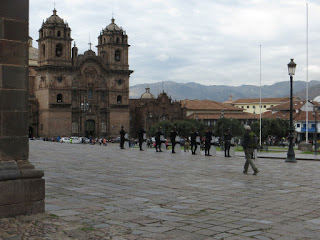
Huge morning parade in Cuzco on the main plaza.  School children.

I watched this happen with every group.  Police officer on the right made sure that the lead person was in the middle and waited until it was time.  The two officers on the left made sure that the next row were in the right spots.

From a distance, I took a photo of this row of police in riot gear on the plaza in Cuzco.  Official looking cars came regularly down the street.
Protests were more subtle than in Argentina or Bolivia. In Arequipa, we were privileged to take the Reality Tour which very clearly presented the lack of action on the government’s part to deal with poor working conditions, sexual abuse and violence directed particularly at women. This NGO has a Facebook page and provides these tours openly but otherwise operates by word of mouth to avoid direct confrontation with the government.  
Arequipa, the white city, is built with these blocks - white from the silicone that poisons the workers who quarry the stone by hand.  This is a day's work for the worker we talked to.  If they met the standard, he would be paid the equivalent of 2 dollars a day.  This gentleman had fled his mountain village thirty years ago because there was safety in Arequipa (military).  


This and other things had been carved by workers in the quarry to encourage outsiders to come to see their working conditions.

Guides and local people did not fear expressing opinions when asked questions.  As we were hiking the Wild Andes Trek, I asked one of our guides what the weather was like in the winter, thinking I’d get information about temperature and amount of snow.  Instead, I got a passionate description of the reality of winter in the highlands – not much snow, but a lot of rain at freezing temperatures which resulted in build-ups of ice so animals died from lack of food while the young children and seniors died of respiratory conditions brought on by lack of food and no ability to heat houses.  Her summary was that this happened every year, it wasn’t an occasional surprise, and that the government chose to do nothing.

Ecuador

I particularly enjoyed the way protests happen in Quito.  The first day I was there, I was taken aback by the police and military presence in the main plaza.  Dozens of riot police were lined up on one sidewalk, there were barricades blocking vehicles from entering and the side streets had police on horseback. Then I noticed that the riot police were relaxed and talking with each other and people were approaching the horses and asking to take photos.  Hmm, security for a government official, I was guessing.  A few days later, I noticed people setting up video cameras, and about half an hour later there was a group of protesters lined up with signs in front of the governor’s palace (with police politely marking the line they needed to stay behind so that pedestrians and vehicles could continue to pass through the square.  The cameras were recording the demonstration for the local TV, I assume.  
These ladies, in typical Quito indigenous dress, were heading across the plaza to be part of one of the protest groups (better social services for lower class communities).  I noted that none of them had the appearance of the local Quechua people.

Scenes from the Monday protest.  I was free to stand as close to the action as I wished.  To the left is the governor's palace, decorated with bunting, where government officials would witness the changing of the guard.  The protesters are lined up to the right.

Horses coming through.  Army (right) and police (foreground) helping get everything ready.  Also directing people away from getting hurt by the horses.  They actually brought an extra horse who stood by the corner so people could take photos.  Mind you, the horses were not as well drilled as the RCMP rides I've been privileged to see.:)


This crowd of army right in front of me were being deployed to move the crowd back a bit so the horses could get through.


On my last day in Quito, a Monday, I headed to the plaza to watch the changing of the guards.  In addition to the guards and horses dressed in their finest, there were three levels of police/military and four separate protest groups. There was no conflict, despite the huge crowds in the plaza that day. Civilians came up to the officers to ask questions, to ask if it was ok to cross through to get to the other side. Street merchants were making the most of the crowd.  The protests were varied, (plea that a general was innocent, indigenous rights, local community insisting on better social services, and a fourth that was an evangelical group) and they each politely took their turn to demonstrate.  So, in less than a week, there were three days of protests in the main plaza.

Columbia

Columbia is working hard to come out from under the shadow of the Cocaine Wars and welcome visitors and investment.  We arrived just as the government and FARC (the main rebel group) signed a cease fire and agreement that rebels would not be prosecuted as they had completed their demilitarization.  There was a huge security presence in the cities to ensure safety of citizens as well as visitors. 

  In Popayan (just over the border from Ecuador) I learned that one of the three branches of the national military is focused on tourism.  I walked carefully past two soldiers with guns at the door of the tourism office to find out about the free walking tour.  The soldier inside smiled and reassured me that I was in the right place, just early.  Walking out, I was confronted by the soldiers at the door.  They wanted, in their best English, to find out where I was from, was I enjoying Columbia, and could they be of help.  
Fruit tasting at Mercado Minorista in Medellin.  At the end, we discovered that we were indirectly part of a demonstration.  It seems that locals are reluctant to come to this incredible market because the area is unsafe.  When Medellin moved to clean up the downtown core, many of the homeless people relocated here.  One of the goals of Real City Tours is to give the message that if it is safe for tourists to come to the market, then it is safe for locals. Interesting, I felt very safe taking the Metro here and walking the nearby streets.  In the daylight.  Without flashing that I had a lot of money.

Another form of quiet protest.  Our guide is telling us the story of this badly damaged Botera statue and it's twin.  In 1995, terrorists (or organized crime...it was not a safe time) placed a backpack of explosives behind this statue during a music concert.  Dozens, many children, were killed.  The perpetrator was never found.  When the Mayor announced the cleanup of the plaza and to remove the statue, he received an angry phone call from Botera himself.  If this statue was removed so people would forget, he would personally make sure that every one of his artworks were removed from Medellin  (dozens of huge statues and an entire museum of his work).  He would, however, create an identical statue to be displayed along side the damaged one.  What I found interesting was that twenty two years later, there has been no vandalism or graffti on or near these two statues which sit in a plaza that our guide felt was unsafe for us to leave on our own as the night was approaching.


Signs in English outside a major museum in Cartagena letting us know that if we entered the museum we were contributing to the loss of jobs.  The museum was replacing human guides with audio guides.

The free walking tours in Popayan, Medellin and  Cartagena were open about the history as well as the current problems.  Yes, there were still rebel groups that hadn’t surrendered and there was still organized crime growing and selling cocaine – but that was all in the jungle where there were no roads to get into anyway. Columbia is working hard to convince their citizens that the country is safe.

“No one is born hating another person because of the color of his skin or his background or his religion. People must learn to hate, and if they can learn to hate, they can be taught to love. For love comes more naturally to the human heart than its opposite.” - Nelson Mandela."

(Tweeted by former President Obama)