It was almost a full day to travel from snowy Alberta to
Brazil. With a stop in Calgary (great
experience with the new terminal and with American customs) and then in Houston
for dinner, I arrived in the early morning to start exploring South America.
Looking at the map before leaving for Rio de Janeiro, I
thought that it was a shame that we were only doing a tiny bit of Brazil. Of course, once you are on the ground you are
reminded how huge Brazil is (almost the size of the United States). It’s 2500 km from Rio to Buenos Aires if you
go the short way and we did a detour west into the Pantanal (almost to the
border with Paraguay) so there were lots of long travel days in the three
weeks. Straddling the Equator, Brazil’s
weather is hot and humid. Arriving in
late summer, the wet season was beginning – so hot and even more humid – and every
sunny day was a blessing.
My time in Brazil divides nicely between the week in
Rio de Janiero for Carnival and then the adventures with Gus (the Dragoman
truck) as we traveled toward the Argentine border for the next two weeks. We
actually were doing a “mirror trip” with Gus’s sister truck, Amber all the way
to Buenos Aires so we were often doing things together.
Coming into Rio, it was fascinating to look for the “same
same different” between Brazil and other places I’ve visited. The favelas climbing the hills with houses
built of whatever was available and with creative wiring had a lot of
similarity to the buildings in Asia – even built in similar manner with bricks
and stucco. These were mixed, however with state of the art high rises and
freeways with hundreds of vehicles. I
soon came to realize that Brazil can compete with first world countries for
education, technology and income (at least for the privileged upper class). And
for this small town girl, Rio de Janiero’s 13 million people were pretty
overwhelming.
Brazil has an interesting mixture of races. During the time of the initial settlement in
the 1500s, the Catholic priests encouraged intermarriage between the whites and
the local native population as well as with the black slaves (quite different
than in North America). The elite are as
likely to have the appearance of blacks or aboriginals as dwellers of the
favelas are to be fair and look like their Portuguese ancestors. The word is that “all are equal”. The concept of special treatment for
aboriginal populations doesn’t exist because there is no distinct population.
Rio de Janiero for Carnival (22.56.13S 43.10.31W)
I’d done my research before leaving home so had booked a
food tour as well as a city walking tour and had tentative arrangements to
visit favela Rochina. This gave me a
chance to get my bearings, find the Metro, and practice my smile and point
Portuguese.
 |
| These interesting things open up to become a beautiful flower |
 |
| Yup. Higher end apartment with palm trees growing on the roof top. |
 |
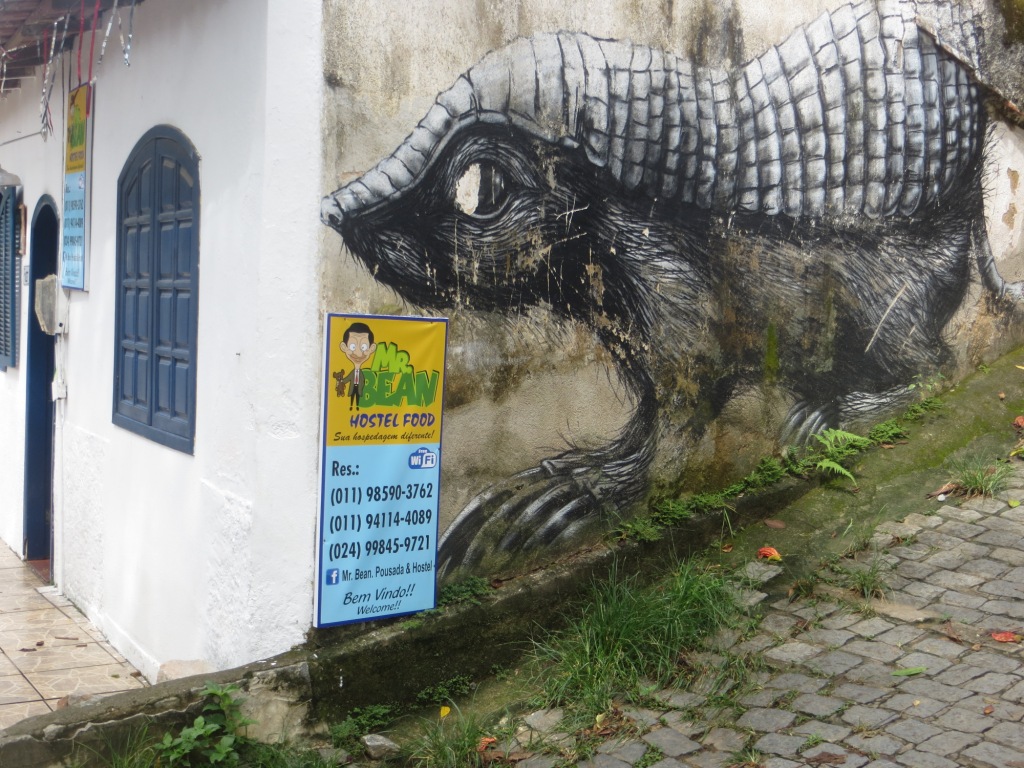
| Grafitti (street art) was everywhere |
 |
| Building dressed up as a book shelf |
 |
Food tour Eat Rio.
We stopped in for "the Best Caparinas in Rio" about 10:00 |
 |
| Watched this being painted |
 |
As these became famous, people started sending ceramic tiles from home
. Yup, Canada is well represented. |
 |
The story about this, is it was painted in early 2013
(just before the artist committed suicide in a rather dramatic fashion)
and it is seen that he "predicted" the results of the semi finals against Germany.
1 Sun (Brazil) and 7 Boats (Germany) |
 |
| Jaca (jackfruit) similar to Durian |
 |
The peppers were so beautifully displayed.
The owner was delighted to pose for a photo |
 |
Our guide explaining about cashews. We ate the fruit.
The seed takes a lot of preparation involving fire to
burn off the toxins related to cyanide. |
 |
| Cocoa |
 |
Watching my personal key being cut at the base of the steps.
Watch for it on my weaving. |
 |
Rules about grafitti.
"Official" ones, like this one which is of a very important local, are not to be "tagged" or painted over.
Same thing in Buenos Aires. Grafitti in South America is way more than kids defacing property. |
 |
| Favelas - kinda like the Jellybean houses of Newfoundland |
 |
The home of the artist of the Selardon steps.
He doused himself with turpentine and set himself a light on the steps outside his home.
He had always said that the steps were his life work and would only end with his death. |
 |
| Favela construction methods |
 |
Michael Jackson's "They don't really care about us" was filmed in this favela.
This wee one was having a great time cleaning the deck while his big brother(s) were playing soccer. |

Two days later, Dragoman’s Carnival package started and my
roomie for the week, Colby, arrived from the UK. She’s this incredible bundle of energy that
was determined to experience everything despite bringing a nasty cold with her
from home. We experienced the huge
Copacabana bloco (200,000 partyers with nary an angry word or thought) then
bumped into the local Flamengo bloco which was way more fun and intimate. One night at the Sambadrome was sufficient for
me – seats weren’t the best and I wish I had known more about the parades
before going. Each samba school has their own followers (who learn the song a
year in advance and sing it out at full volume) and the dancers, floats and
drummers all have a structured meaning and purpose. I also headed up to the Cristos monument by
bus with a couple of fellow travelers and then had enough nerve to take the bus
out to Parque Lago for the day (where I bumped into another medium sized bloco
centered around to Botanical Gardens).

 |
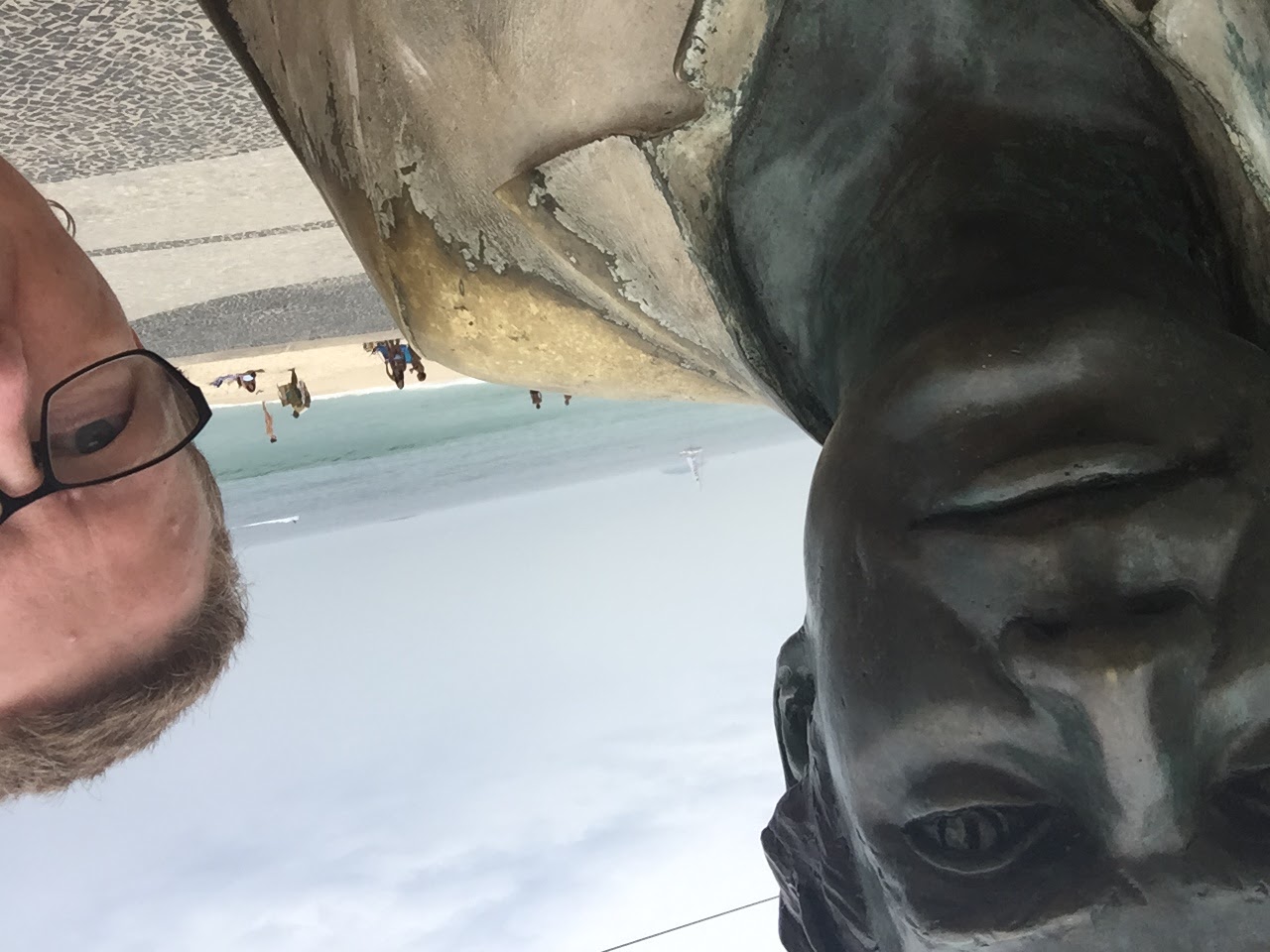
| Me and Tom Jobin in Ipanema |
 |
| The best corn ever on Copacabana as the bloco was wearing down |
 |
| Leaders of the Flamenco bloco that we bumped into. |
 |
These guys were waiting at the bus stop (no doubt on the way to a bloco) and wanted to take a photo with me.
Sadly my bus arrived, but they posed as I was on the step. |
 |
| Entering the sambadrome, we got handed handfulls of female condoms |
 |
| More grafitti in Favela Rochina |
 |
| Copacabana beach |
 |
| I was just standing quietly in the huge crowd and these vendors turned around and gestured that they wanted me to take their photo. Still can't believe wall to wall people, gallons of alcohol and other substances and no pushing, shoving or violence. |
 |
| Sambadrome. Catherine from Manchester and my roomie Colbie |
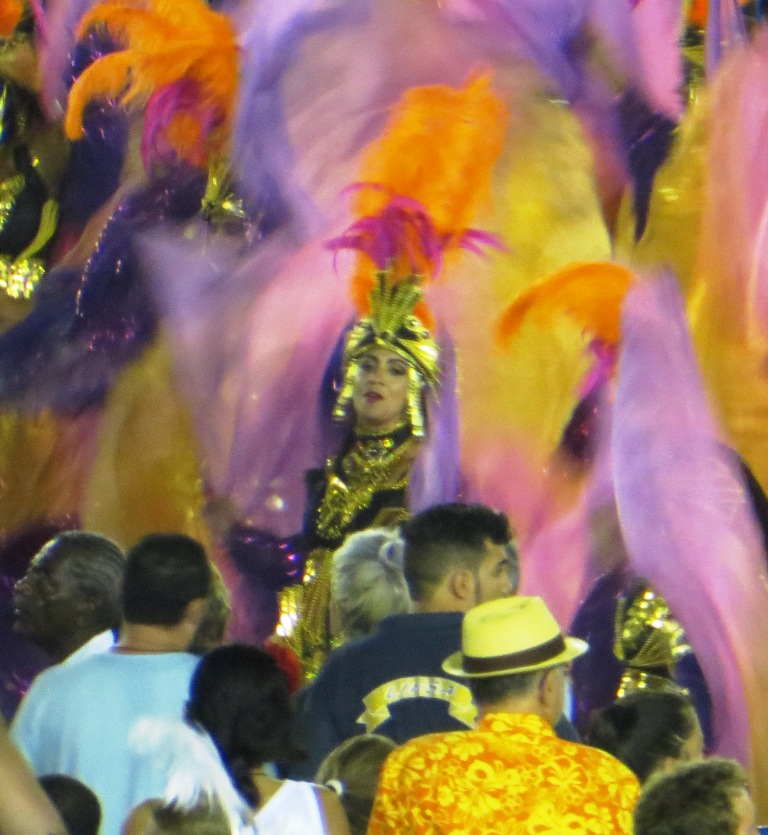
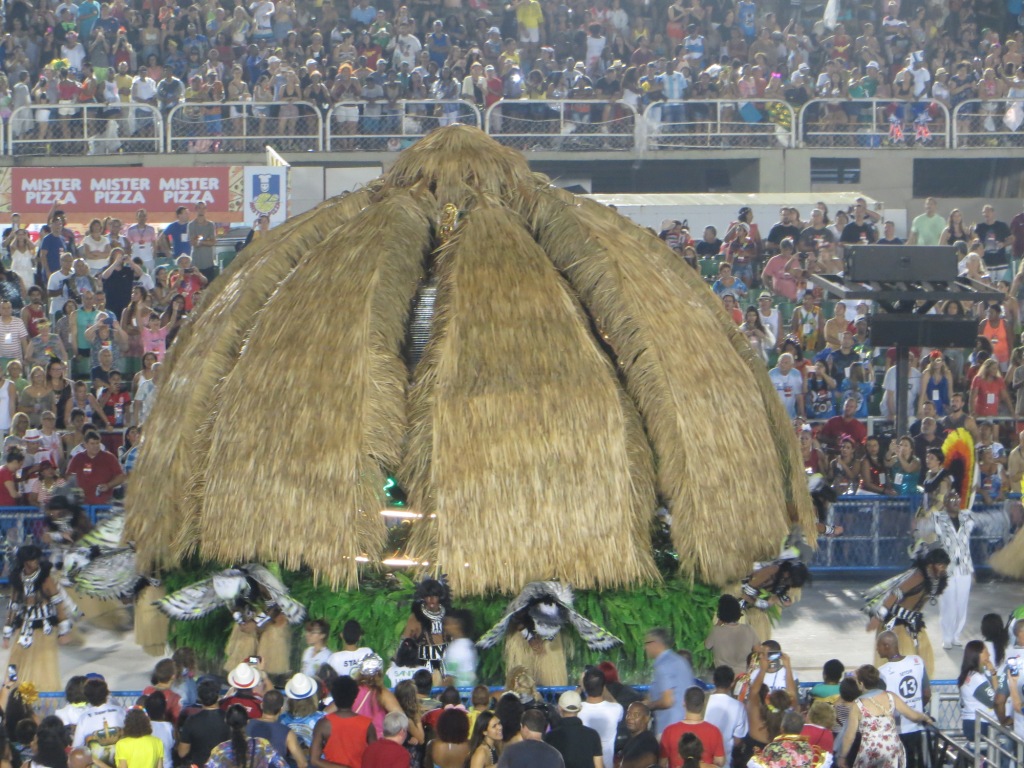
Here's some of the sights from the Sambadrome. I was taking photos at extreme zoom for my wee Canon, so please forgive the blur- which I like to think as part of the art.
 |
Flamengo Beach near our hotel.
The fellow had been tossing the ball into the water for the dog to chase.
After a while, to dog got bored and let his person go get his own ball!!
I remember this with our old dog Stout, too. |
 |
| Parque Lage. The local nick name means Christo's armpit cause that is where it is. |
 |
| Yup, an 18th century British castle. Created for the original owners. |
 |
| And an aquarium |
 |
| Our guide for Rochina favela. His day job was as a DJ |
 |
"Only in Rio do the poor people get the best views
and the rich people live in the valleys" |
 |
This is one of the favelas that have been "taken over" by the police and are fairly safe.
This process was started less than ten years ago by the first female police chief.
New meaning to community policing. |
 |
| Zezhina, the "owner" of the favela tour. Part American. Delightfully bizzare. |
 |
| Our guide's wrist tatoo. The Islamic writing refers to the power of music. |
 |
| Coffee for the trip |
Great time was had, but it was time to get out of the big
city. In reality, we traveled along the main roads through an
assortment of large towns and through farming areas. Even our “bush camp” was at a local petrol
station (with basic bathrooms and showers)because all the land is fenced and
privately owned.
Paraty (23.12.26 S 44.43.4 W)
Dorms on the beach. A
great boat trip with stops to swim followed by the mother of all storms. When it rains here, it is like the weather
gods dump a huge bucket of water all at once.
Thankfully, my bag kept my camera and iphone dry – several members of
our group were not so lucky. I also
found the Correios (Post office) and did a bit of retail therapy.
 |
| If you own your own island, why not build your own castle? |
 |
| Back at our hostel with the rain still pouring down |
 |
| I have a magnet hand painted by this street artist. |
 |
| "going for a ride" |
 |
Interesting. In front of the heritage church,
this fellow with chains in hand was talking to the crowds and inviting them to take pictures.
I think it was a discussion of the slave past. |
 |
| The underside of the tile roof in an artist loft. |
 |
| Reward to those of us who were early to the bus on leaving day. I learned that leaving before daylight was pretty usual when sunrise happens about 8:00 |
Brotas (22.17.19S 48.38.5W)
First camping with Rhea (our tent) and Lorna (my
tentie). Rhea, like all the tents, is
old and needed some repairs the first night so she could be set up. Since then, we’ve scrounged enough tent pegs,
made a few more repairs, and constantly praise and groom Rhea. She shows her appreciation by being
waterproof, warm on cold nights and snuggles willingly into her bag for her
roof ride between campsites.
 |
| On route. This crazy over the top petrol station |
 |
| Moth posing for photo |
Fazenda San Francisco in the Pantanal (20.5.11S 56.36.52W
130 meters)
North and west we traveled to explore the temperate rainforest
of the Pantanal. Fazendas were
originally established to grow rice and cattle as well as sheep. Of course, when you take off the original
vegetation, you discover that the land is poor and you can’t grow as much as
you thought you could. The heat makes cattle very difficult to raise. Many of the fazendas discovered that
ecotourism was a much better way to make a living. I never got bored of the quantities of
animals who didn’t seem afraid of us visitors.
 |
| Capybaras became almost common |
 |
| Rhea. Ranchers encourage them to hang around because they eat snakes. |
 |
We were told that deer were uncommon,
but we saw them every day we were out. |
 |
| Jesus bird - because they seem to walk on water |
 |
| I'm sure this was reminding me to wear insect repellent. :) |
 |
| Burrowing owl just posing. |
 |
Not sure if this is cheating,
The top pole was actually a bird feeder and at different times of day,
different flocks would show up. |
 |
| The day before, this local guide was the driver and only spoke Portuguese to the "official" local guide. This day, with no official guide, he was allowed to speak English and was a wealth of knowledge about the area, the animals, the fazenda. Apparently, he taught himself English so he could understand the biologists and learn more about the area!!! His wife was the boat driver on our Piranha fishing trip and he came along to help her. |
 |
| Mate cup and straw. The rest of the decore would fit into any Alberta ranch. |
 |
| Typical gaucho saddle |
 |
| And working boots |
 |
| Cows. They imported Brahmas from India (white ones) because they can tolerate the heat and the poor feed. Then "Montanya" were imported from the UK for better meat quality and interbred. They all looked skin and bones and generally unhappy. |
 |
| Heading out to fish for Piranha |
 |
| And Caimen - Alligators |
 |
| This piranha had been dead for about half an hour, but still reflexively bit the stem when put in his mouth. |
 |
| And the other reason for fishing for piranhas is to put them on a long pole... |
 |
| ...as an offering to the eagles to come closer to the boat for photos, |


Our last night, we had a traditional barbecue preceded by
local dancing and music. I smiled
because anybody from home would have fit right in with the two step dancing,
even if the words to the music were in Portuguese. The traditional dress was blue jeans, boots
and a wide brimmed hat. What fascinated
me, though, were the colourful sashes that were worn by the ladies that looked
just like the Metis sashes from Canada. With my point and smile Portuguese,
supplemented by the excellent English of one of the local guides, I learned that
these sashes are woven of cotton thread (cotton is grown in Brazil) with
traditional patterns and colours (so loom woven not finger woven) but that they
also serve a useful purpose. The gauchos
wear them under the shirt to support the core while doing the heavy ranching
chores (and they were traditionally made for them by their
wives/mothers/sisters/girlfriends). The
ladies wear them for special occasions to show off their work. They are called Paraguay straps and are now
usually made by the local Guarani. By
luck, the artisan’s market at Foz had a lady who made them.
 |
| Our room name was "Guapo" which apparently means beautiful woman" |
 |
| View from the loo. Guys bathroom had a snake showing just before we left. |
Bonito (21.7.22S 56.30.6W 400 meters elevation)
Hostel in a tourist town.
The day snorkelling down the Rio da Prata was great fun. The waterproof case I put my camera in for
the trip down the river was not as waterproof as I had thought. My wee Canon that survived the dust storm in
Dunhuang seems to have forgiven me for the dunking, but has become more
temperamental.
 |
| Local church |
 |
| Phone booths are called "Oie" which is slang for Hi. |
 |
| Getting ready to snorkel the river |
 |
| Trust me, we were having a good time |
 |
| Retail therapy |
And of course, in a tourist town you can find great food,
and a wealth of retail therapy. Amongst
other things, I broke down and bought a pair of Havaianas at the last stop
before the border. And left my Aussie
jandals behind.
Foz do Iguacu (25.36.17 S 54.31.29W 210 meters)
We stayed at a hostel on the Brazil side and visited both
sides of the falls. Most of us stayed in
tents but for some reason I deserted Rhea and opted for an upgrade to a dorm
room. Sorry, Rhea, I promise to not do
this again.
The border between Argentina and Brazil runs through the
falls – each side maintains their own national park in unique and different
ways and the name is also slightly different (Foz do Iguacu in Brazil and
Cataratas del Iguazu in Argentina). It
took a bit of workaround to avoid the thousands of tourists, but the views were
stellar. Yup, three times the water flow
of Niagra. Also, this is the waterfall
in The Mission.
 |
Coati (Argentina) or Qatil (Brazil). Cute.
Nasty little fellows that will attack you for food. |
 |
Just a reminder that things aren't always so peaceful.
Major war in the 1800's saw Paraguay lose this area.
This is a memorial to a local guard who lost his life in 1969 to "insurgents" |
 |
| A bit of colour |
 |
| And the monkeys were outside the cafe for photos (and treats) at noon |
 |
| Evidence of how high the water comes in the right season |
 |
I stopped to talk to Erin and she pointed out the alligator she was watching.
I took this photo, but I think this is a rock, not the alligator! |
 |
| Flocks of butterflies |
 |
| The lady who hand wove my Paraguay strap |
A side trip on the Brazil side was to the bird park – actually
a rescue sanctuary for a myriad of birds as well as some fish, a few anacondas,
cool butterflies and even two Australian cassowaries.
 |
Check this photo carefully.
There was actually a mirror at the back of the enclosure, so not nearly as many flamingos as you think,
The dot of blue in the back left is actually me taking a selfie :) |
 |
| The best poor Canon could do with a cool black butterfly on a blowing leaf. |
 |
| Anaconda |
 |
Two anacondas were wrapped around this pile of wood.
No fence between us and them. |
 |
| The "guard"would occasionally spray them with water |
 |
| I have no idea why there were two cassowaries here |
Leaving Foz and entering Argentina (our first border
crossing) showed Team Gus’ true style and you can read about it
here. Next stop Buenos Aires.