Showing posts with label overland for a year. Show all posts

Monday, 18 May 2015

A year of travel: Last thoughts before moving on


Two months ago we arrived back in Edmonton after almost a full year travelling.  It seems a good time to organize some last thoughts before moving on to the next adventure.

After a year, it was interesting what things were easy to remember and what things had been forgotten.  My body took almost two weeks to get over the jet lag of flying from Hong Kong – not quite far enough to gain a whole day, but enough time zones that my brain wanted to be wide awake and doing something in the middle of the night.  Driving was no problem, as a passenger for a year in countries that drove on the left side of the road, my muscle memory still knew the “right” way to drive.  But stopping for gas the first time was a scramble to figure out how to open the gas cap. Mother Nature also gave us snow to drive home in, just to remind us of what we had missed. Getting back into the habit of cooking, with a full kitchen of food and appliances, took a bit of getting used to.  Kati’s planning to get everybody together for Easter caused initial panic (what will the menu be and can I remember how to organize so everything is ready at once) but after a deep breath we all just went with the flow.  After all, do you really need to impress family?

First week home was almost like setting up a house for the first time. We had packed away most of our belongings so that our friends who were house sitting could have room for their things.  Opening up boxes (and remembering where the boxes were) was a bit like Christmas – gifts to be admired and places to be found for things that hadn’t been used for a year. Restocking the kitchen after getting used to shopping on a day to day basis.  Actually, I believe I was in the grocery store daily for two weeks getting one or two essential things that I had assumed were in the cupboard or fridge. Gradually unpacking boxes we had sent home from our travels and deciding where to put things, then working to organize piles of things, then integrating items into our life.

At work, it has also been interesting getting back into a routine.  In some ways, it felt like I had never left, but the reality is that things have changed (more or less) and I have needed to ask a lot of questions and watch carefully to make sure I don’t miss anything.  “So what’s changed” didn’t get a lot of answers from my coworkers.  “Tell me about the new babies” or “Who’s died” worked better.  I’ve needed to attach names to new faces and get used to the fact that things are different.  Funnily, we have had a major change in our electronic documentation software, which has put us all on a level playing field.

People have greeted me with one of two types of questions – “Did you have a good time?  What country did you like best?”  This from people, I suspect, who wonder if they would like to travel as we did.  “Are you glad to be home”, from those who can’t imagine pulling up roots for a year to wander in strange places.  Did I have a good time?  Absolutely, even when I was too cold or too hot or uncomfortable because I was seeing and doing things that I would not be doing at home.  Rather than saying which was my favorite country (they all were for different reasons), I would say that I want to return to southeast Asia because we traveled too quickly through those countries.  I don’t feel a need to return to Australia or New Zealand because they are so similar to Canada where there are many places I have not yet visited.  I also would not return to India because I felt unsafe. Am I glad to be back home?  Absolutely, but that doesn't mean I won't wander off again to explore.

On reflection, I think more helpful questions would be “What did you learn?”  or “How do you think you are different now?”

I learned to live in close quarters with strangers who quickly became fellow travelers, to share skills and knowledge so our time together was enjoyable (even when we were hot and sweaty, tired, sore, craving western food and a shower...).  I met fascinating people who shared the love of their country and I seldom felt afraid for my safety.  I have come to appreciate how special my home is – where I do not have to worry about too much water or not enough, or earthquakes or volcanoes, where it is safe to express an opinion and I can travel if I wish.  Where I was able to feed, clothe and educate my children. At my annual medical, where I was expressing concern about a series of nasty respiratory infections, my family doctor clearly put things into perspective – chest xray to rule out the possibility of tuberculosis because of where I had been travelling (and I am carefully watching for fever and the possibility of malaria).

A year of travel has changed how I see home.  My initial thought on unpacking was that I had way to much stuff – what was I thinking when I thought I needed so many pairs of socks and underwear, and surely one pair of long black pants was sufficient?  On a positive note, I find myself more aware of the beauty around me.  My urge is to pull to the side of the road to take that photo of the sunlight on the puddles in the ditch or the field of swans and then geese as they return north for the summer.  But, my camera is not beside me.  Watching the coming of the green which signals spring in Northern Alberta was a joy – and I did stop part way down the Dunvegan hill to take a photo the day the hills had gone from black and white to new fresh green. I did take photos of our back yard with its last (I hope) spring snow and the tiny leaves of rhubarb breaking the surface of the dirt.


Listening to the news is different as well.  Armenia and Nepal are real places with real people that I have met.  As I have been rereading travel books about the places I visited, it has been fascinating to realize how things change in a few short years.  The (Lonely Planet) Wheelers, travelling from London to Australia in 1973 chose the southern route through Asia (Iran, Iraq, Afghanistan, Pakistan) because it was safer and travel was basically impossible through Russian controlled Asia (Georgia to Kyrgyzstan then into China as we did).  Southeast Asia was still in the midst of a decades long war.  People younger than me who were welcoming me into their country had lived through these troubled times. More recently, the earthquakes in Nepal likely mean that our travel from China through Nepal and into India may have been the last overland trip for some time.

I chanced upon this blog post while we were travelling. Not that we were living abroad, but there are a lot of similarities to what we experienced.

Just to finish off with one last set of quotes about travel.  This had much more meaning to me when I reread this book after returning home than it had the first time I saw it more than a year ago.

“I love travel because you may be uncomfortable, hungry, hot and sweaty, cold and shivering...but damn it all, you will never be bored...the buzz of arriving somewhere new and the thrill of returning to a favourite place.”
Tony Wheeler (Lonely Planet) quoted in the book “Tell them to get Lost”


Wednesday, 8 April 2015

Things I learned while travelling III: Always listen to your public health nurse...

... but some things are more important than others, use common sense.

During our year of travel, I certainly learned that some pieces of advice are more important than others.  It was interesting to talk with other travellers about what sorts of advice they had picked up along the way and even though they all came from similar (first world) backgrounds what others decided was important often varied widely from what I had come to believe was true. I’ve learned to thoughtfully compromise on some things in order to experience the local culture but also to be firm about what seems to be most important.

Here are some of the things that I still think are absolutely essential if you are going to do long term travel that involves camping, hostelling, homestays, or travel to developing countries.

Pre trip planning

Immunizations including routine updates and anything recommended.  I wondered if I had over prepared when we included rabies vaccines in our list, but we were definitely in areas where there was the potential for bites AND where rapid treatment was not available.  I had interesting conversations with fellow travellers who had extensive experience with safaris in Africa or adventure travelling in areas of high incidence of rabies who had never thought this might be necessary.
Malaria medication if it is recommended.  Bring medications from your home country and don’t assume that you can buy the correct medication along the way. Bring extra to allow for a change of plans.  I discovered, for example, that I could not get Malarone anywhere in Malaysian Borneo (despite the high risk for malaria anywhere in the interior) and that only Doxycycline was available.
I brought a variety of prescription and non prescription medications to deal with common diseases as well as basic bandaging materials.  I used very little, but would definitely carry the same types of things again.  A good reference is the medical chapter in Lonely Planet's “Trekking the Nepal Himalaya”, even if it is dated.
Travel medical insurance that will cover you if you get sick or injured in the locations you are going to be and doing the things that you are doing.  Even if you never need to use the insurance, it provides peace of mind.  One of our fellow travellers had found the hard way why this was important.  He and his partner had the standard basic insurance, but when she was diagnosed with dengue and then hospitalized, they discovered their policy didn’t cover the hospitalization costs in an almost western style hospital nor did it cover trip cancellation.  She had no choice but to fly home.

Food and Water Precautions

This was definitely an area where using common sense played a large part. The common reminder “well cooked, served hot, washed with water you know is clean, comes from a bottle...or forget it” needed to be applied with some thought.
Travelling overland, we were responsible for many of our own meals – the purchasing, the preparing, and the ensuring that everything was a clean as possible.  Handwashing was stressed as was proper washing of dishes.  But, the disinfectant of choice was Dettol antibacterial liquid, primarily because the company has a very effective marketing arm, not only in Asia but also in the UK where our guides came from.  I felt this wasn’t something I could compromise on, even if others were ok with this so on our last trip to a western type shopping mall in Turkey I purchased a large container of household bleach and extra large containers of alcohol hand sanitizer.  It helped that someone else on the trip supported this – as a veterinarian this was standard procedure in her practice.  But, always carry extra because there are some places that these things may not be available.  Alcohol hand sanitizer in China is a prime example.


Water I knew was clean also was a priority.  We carried reusable water bottles and filled from large commercial bottles we could purchase everywhere.  And we made sure that the bottles were washed and soaked in a bleach solution on a regular basis.  Or we drank hot drinks with water we had seen come to a boil.  Interestingly, in China you would see locals bringing large thermal jugs to work filled with water they had boiled at home.  Don’t assume that anything in a bottle is safe to drink – on arrival in Uzbekistan, our guide explained which brands of water were recommended as some of the other brands did not actually follow accepted standards.

Not only was Nescafe the only coffee available.
Nestle also provided safe drinking water
(as well as baby formula)

Well cooked and served hot was generally a good recommendation but I will confess to using common sense when it came to ice cream and fresh fruits and vegetables.  How can one refuse beautiful homemade ice cream in a village in Kyrgyzstan after you have been smiling and visiting with everybody and enjoying the local meal that had been prepared before our eyes?  Would I have refused if I had known ahead of time that the dishes were being washed outside the door in a bucket of water from the community pump?  Or how to refuse the opportunity to try fruits and vegetables picked right off the tree?  I well remember stopping for lunch at a small town, finding a small local open air restaurant and negotiating fried rice for our meal. The chef began washing and chopping things and sent a child out to get the neighbour to pick some vegetables from the garden.  It was delicious, well cooked and served hot, even if the water probably wasn’t clean enough to drink.

Watching this wee girl eat her ice cream without spilling a drop
was just too irresistable...


local open air restaurant.  Bottled water, disposable cups,
clean table.  Plus we watched the food being cooked from
scratch.
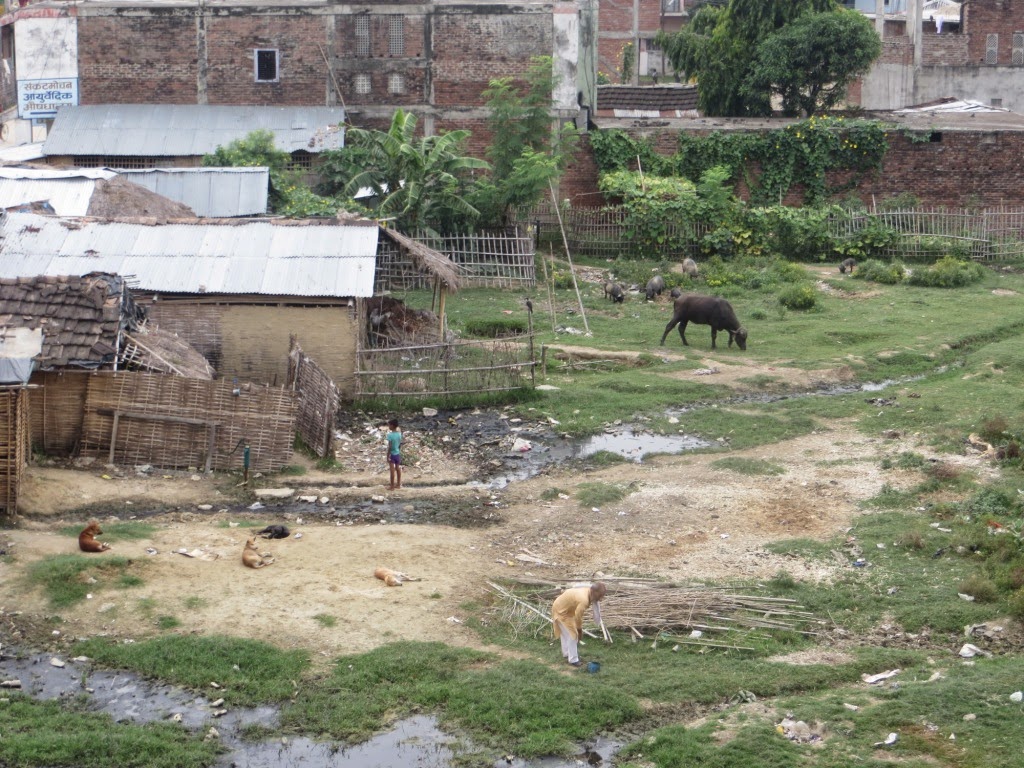
We encountered a few places where it probably wasn’t safe to eat and we tried to always have some packaged snacks for such occasions.  The day we stopped at a market on a muddy street where you could see that the water for washing reusable dishes was runoff from the rice paddies that was being used by humans and animals alike AND that the cooked market food was precooked and sitting in the open....  We ate chocolate bars and bottled water and were not sick the next day unlike some of our fellow travellers.  On the other hand, we also stayed in a community where we were the only western tourists (possibly this year as we were well off the beaten path) and there was only one place to eat.  We watched very carefully what locals were eating and tried hard to not watch how the dishes were being washed outside in large bowls of water.  Common sense says you can’t not eat for two days.
Being aware of food and water precautions doesn’t stop when you are travelling in a first world country.  In the same way that we hear of food borne outbreaks in Canada or of the need to filter or treat water when backpacking in the mountains,  common sense needs to be used anywhere you travel.  We were quite surprised on one outback tour where the things we had come to expect in developing countries were not available.  Water still needs to be treated if it is coming from a source that is untested, particularly if it is being used by humans and animals.  You need to maintain cleanliness of your cooking facilities and hand sanitizer needs to be available if running water and soap is not.


Beautiful campsite in the outback.  More basic than many we
used in central Asia.

Bugs and Beasties and Things that Nibble at you (Insect Precautions)

Mosquitoes carrying malaria or dengue aren’t the only thing to be aware of when it comes to insects.  We also became well acquainted with the local leeches, ticks, scorpions, spiders, and other interesting beasties.  I found it fascinating learning how to deal with these creatures from guides as well as fellow travellers.


This lizard got some emergency outpatient tick removal surgery.

We took antimalarial medication in risk areas and were very conscientious about insect repellent – DEET 30% from Canada then from Thailand.  It was difficult to find DEET repellent in Australia so we postponed purchasing any, thinking it would be easy to find in Indonesia or Malaysia.  NEVER assume.  All that was available in Indonesia were “natural” repellants and in Malaysia we finally found some “family strength” (14%) Off (and only in pharmacies).  The reason was that in these two countries, the accepted procedure is to spray your bedroom with a strong pesticide rather than put anything on your skin.
We had to make a lot of compromises about insect precautions based on the realities of the situation.  We didn’t carry permethrin treated nets (as is recommended by public health) for space reasons.  There were a couple of places where they would have genuinely been appropriate – sleeping in thatched rooms that were obviously open to the night air where the “bed nets” provided had huge holes.  Instead we liberally applied insect repellent and hoped for the best.  On the other hand, we had one night in a “basic” camp in the interior of Malaysian Borneo, where our sleeping platforms had good quality netting available.

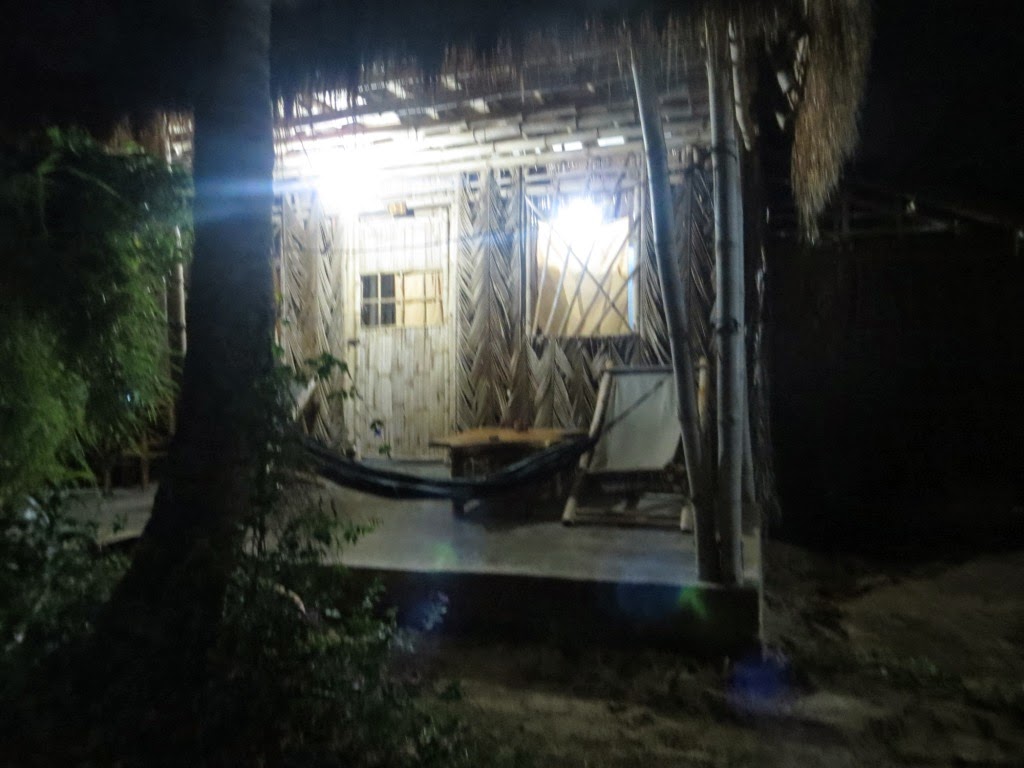
Scenic jungle resort in Vietnam.  Thatched walls and roof
with decorative (not functional) bed netting.  Rural area with
significant risk of malaria.  No choice but to apply insect repelant
and hope for the best.

View from our basic hostel at camp 5 in Mulu National Park.
Definitely in a malaria risk area.  Each sleeping space had
bed netting to totally enclose you.  A great sleep was had.
The other compromise we had to make was as we came to the end of our travels.  We carried enough Malarone (I thought) for all the areas we were travelling through where there was a risk of malaria.  However, as we arrived in Borneo, we were running short just as we were starting to travel through the probably highest risk area of the trip (rural, jungle, interior of the island).  Yes, we found a western style clinic with a doctor trained in Singapore and yes he was prepared to be as helpful as possible.  But Malaysian medical clinics only stock Doxycylcine and it was Chinese New Year and the GSK representative was on holiday so not available for a special purchase of Malarone.  So, with enough Doxycycline in hand to get us back to Canada, but not really wanting to take a medication that had some nasty side effects, it was time for some serious thinking.  From the malaria maps we could access on the internet, and a careful discussion with our guide (how far, exactly, from the coast was this river lodge?) we took the chance that in our last week we would be passing through malaria areas in the daytime and sleeping in lower risk areas.
It wasn’t all about mosquitoes.  Travelling through the deserts of central Asia we became used to the assorted flying insects that were attracted to our moisture.  Eau de DEET was applied faithfully in combination with sun screen.  When we got to Australia, I was able to find sandalwood essential oil which once again proved to be an essential deterrent to the tiny flies that wanted to infest my eyes, mouth, nose and ears.  Not anything that we think about in Canada, but something that I had learned from a guide on a previous trip to Australia.

It can’t be stressed to much that the best advice is to listen carefully to the advice given by others – a health professional who can give you evidenced based recommendations, your guide who has expertise about his local area, and even your fellow travellers who will share advice they got as well as experiences they have had.  Then filter it through your knowledge of what has worked for you and what your common sense says is important. Will I do things the same on another long term trip off the usual tourist trail?  Some things, yes.  Will I make changes on the basis of knowledge and experience?  Absolutely.

Saturday, 24 January 2015

Memories of Nepal

We traveled through Nepal in late July, passing very quickly from the highlands of the Himalayas to the valleys below.  I mentioned in my blog about it feeling like everything was on the vertical - narrow roads clinging to hillsides as we moved into temperate rainforests at sea level.  As I review these photos in late January (so six months later), I still remember how odd it was to come out of Tibet and into an area with lots of western tourists.  We weren't unusual anymore.

The other change for Nepal after we left was a major landslide on the main road north of Kathmandu. We followed with interest the Kathmandu to Istanbul blog as they worked to figure out how to get everybody across the section that was not passable for vehicles.  A minor problem for them (and great bragging rights, I think) but a major issue for Nepal when its only north south route is cut.

I love this photo that Alicia took on our river cruise in Chitwan National Park.
It makes me look like the grand explorer.

Retail therapy in Kathmandu.  OK, not made in Kathmandu, but
hand embroidered by the ladies in the shopkeeper's village in
India, just across the border. My living room is going
to be festooned in assorted pillow cover sized fabric arts!

Driving into Nepal, we are starting the long downhill drive.


Wee friend at the Last Resort


Crossing this bridge from Calypso to the resort was more than
enough for me.  These crazy folks are waiting to jump off
the bridge


terraced rice fields.  Terraced by hand over hundreds of years

Health and safety.  This guy was in flip flops and using a metal
ladder to work on the loose wires.


Our stay in Kathmandu was a sensory delight.  These
quilts were embroidered by hand and a full sized bed quilt
would cost the outrageous price of about 50 USD

Visit to the monkey temple.  We got there by tuk tuk
and then back by taxi.  Part of the experience.


Eyes of the Buddah.  On everything.  Including a lovely wee
purse I purchased in Tibet (made in Nepal)


Snow leopards guarding something.  Any time you
saw snow leopards, you knew there was a Tibet connection.


Thhis little fellow had a lovely time entertaining the pigeonns


Nico organized a group meal complete with local dancers.

Courtesy local alcohol (rocket fuel) served in unglazed
crockery that I think was supposed to be thrown on the floor.


views of the Annapurna range from Pokara


One day we walked around the lake.  This dog followed us from
almost the beginning.  Defended us from several sets of dogs (who clearly
thought he was invading their turf).  Then stopped off at his house
as we passed it.


And the mountain itself (Annapurna) sneaking out from
the clouds as we drove away from Pokara


Alicia in front of me in the canoe


Our guide showing us one of the many bugs


Breeding center for elephants.  I found it very sad to see
the animals tied so they could not move at all.  Many behaviours
that showed how traumatized they were.


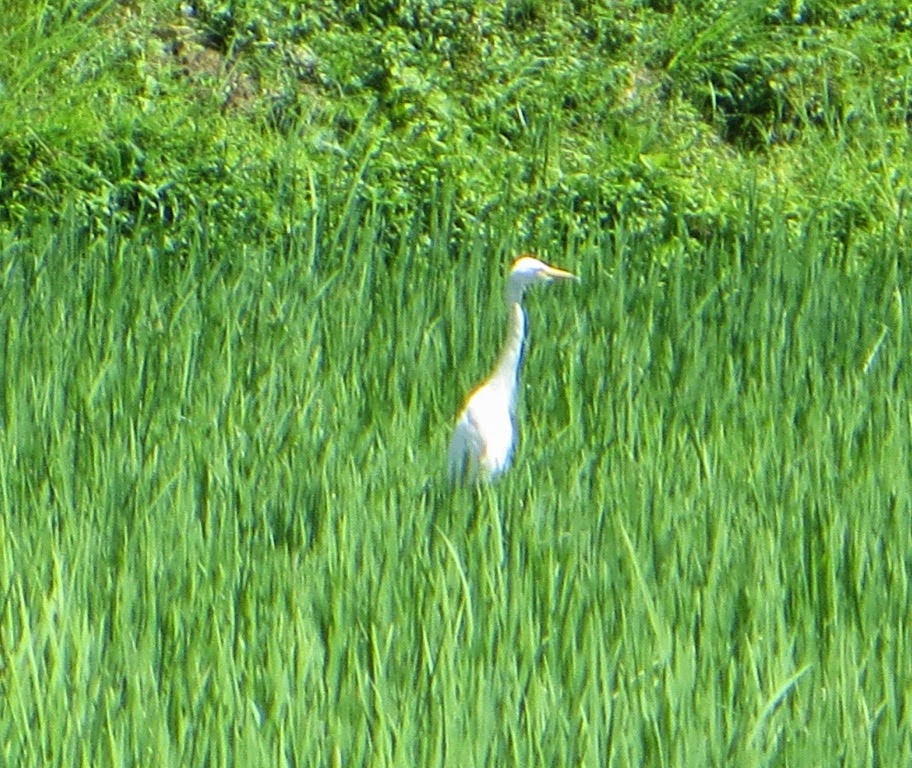
Throughout Asia we saw these guys - great at eating insects.

It was Shiva's birthday as we were travelling into India
we passed dozens of processions with people carrying containers
of water from the Ganges and all dressed in orange.


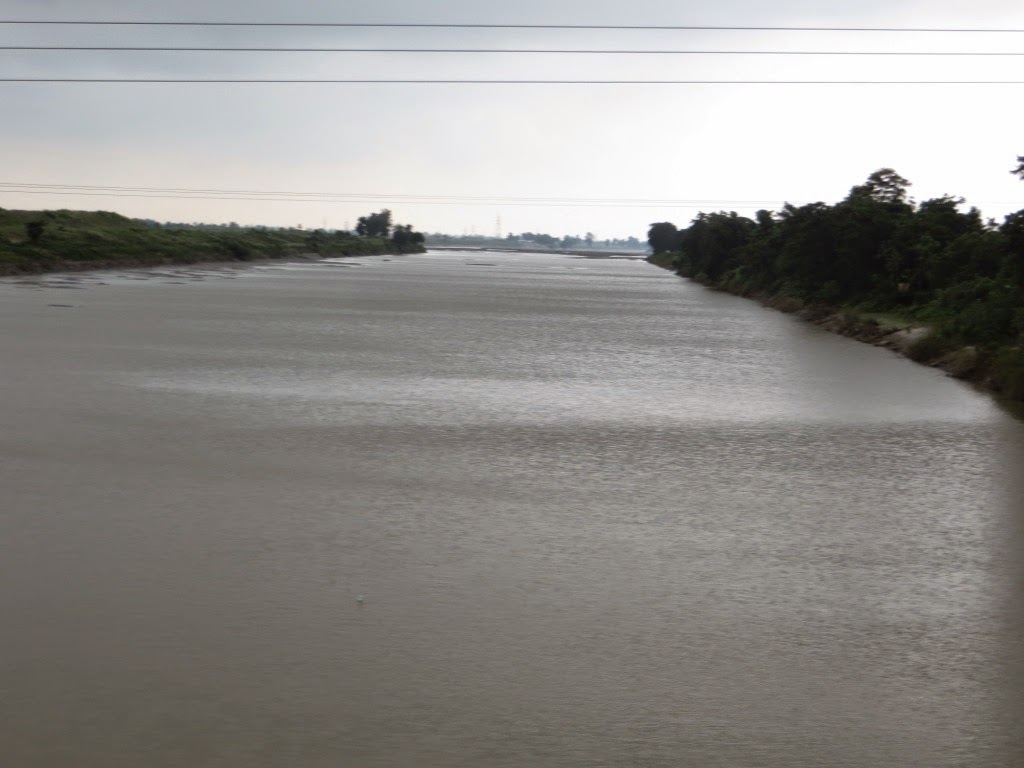
The Ganges (upstream, so not yet horridly poluted)


Trying to get the Nepal Carcassone game completed before the border

Nepal side of the border.  The Nepal/India border was
so relaxed that we missed it and had to go back across the bridge
and start over.